Key takeaways
- Compare five proven camping stoves for car camping and backpacking, from two-burner propane cooktops to ultralight canister burners and fast-boil systems.
A good camping stove turns a cold campsite into a kitchen. The right one boils water fast on a windy morning, simmers a sauce without scorching it, and packs away without eating half the trunk. This guide compares five proven stoves that cover the full range of camp cooking, from family car camping to solo backpacking, so you can match the stove to the way you actually camp.
As an Amazon Associate, we earn from qualifying purchases.
Quick Answer
For most campers, the Coleman Classic 2-Burner Propane Stove is the pick. It cooks two pans at once, runs on propane cylinders sold almost everywhere, and has a simple design that has fed campsites for decades. Backpackers who count every ounce should look at the MSR PocketRocket Deluxe instead, while the Camp Chef Everest 2X suits cooks who want serious power for big group meals.
The 5 Best Camping Stoves
1. Coleman Classic 2-Burner Propane Stove — Best Overall
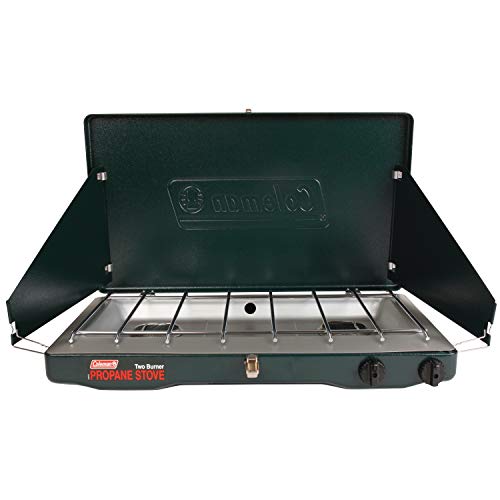
The Coleman Classic is the default camp stove for a reason. Two independently adjustable burners put out 20,000 total BTUs of cooking power, enough to fry bacon on one side while coffee water heats on the other. WindBlock panels fold up around the burners to shield the flame on breezy mornings, and the PerfectFlow system keeps the flame steady as the cylinder empties and the temperature drops.
The cooking surface fits a 12-inch pan and a 10-inch pan at the same time, which is the real test of a two-burner stove. A chrome-plated grate lifts out for cleaning, and the aluminized steel cooktop resists rust after seasons of outdoor use. One 16.4-ounce propane cylinder, sold separately, runs the stove for up to one hour with both burners on high. The stove carries a 3-year limited warranty.
What keeps the Classic at the top is the combination of wide availability, simple controls, and a size that fits on a picnic table without crowding out the food. There is no built-in igniter, so pack matches or a lighter.
2. Camp Chef Everest 2X 2-Burner Camping Stove — Best for Power

The Camp Chef Everest 2X is the stove for cooks who find ordinary camp stoves underpowered. Two high-pressure burners deliver 40,000 BTUs in total, with 20,000 BTUs per burner, so large pots of water come to a boil quickly and a big skillet stays hot when cold food hits it. Matchless ignition lights each burner with the turn of a knob, which is a welcome convenience when hands are cold or the wind is up.
Despite the power, the Everest 2X still simmers well enough for eggs and sauces, which is where many high-output stoves fail. The wide cooking surface handles two large pans at once, making it a strong choice for group trips and base camp cooking. It is heavier and bulkier than the Coleman Classic, so it suits campers who drive to the site and set up a real kitchen rather than hikers.
3. Gas One GS-3400P Dual Fuel Propane and Butane Stove — Best Budget Single Burner
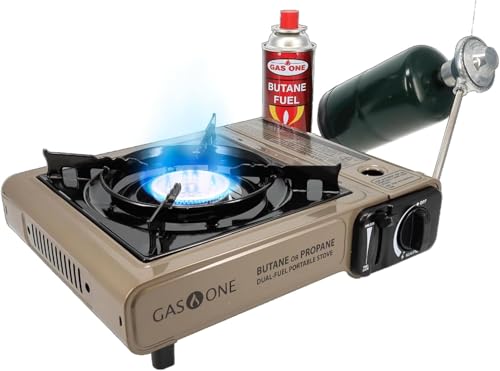
The Gas One GS-3400P is a single-burner stove that runs on butane or propane, which makes it one of the most flexible budget stoves available. Solo campers can use a butane canister for a light pack, while car campers can hook up a propane cylinder with an adapter for longer trips. That dual-fuel design also makes it a sensible backup stove to keep with emergency supplies.
A single burner keeps the stove small and light, and it sets up in seconds. It is the right size for boiling water, frying one pan of food, or heating a pot of soup. It is not a stove for cooking a full meal for four people at once, and anyone planning group dinners should pair it with a second burner or choose a two-burner model instead.
The GS-3400P earns its place as the budget pick because it does one job well at a low cost. It suits solo campers, couples who cook simply, and anyone who wants a spare stove in the trunk. Check that the fuel canister or cylinder you plan to use matches the stove, and confirm whether an adapter is included before the first trip.
4. MSR PocketRocket Deluxe Canister Stove — Best for Backpacking

The MSR PocketRocket Deluxe is built for hikers who measure gear in grams. This canister stove screws onto a fuel canister and packs down to the size of a small mug, disappearing into a cook pot or a side pocket. A pressure regulator keeps the flame steady as the canister empties and the temperature falls, which matters on cold mornings at altitude.
Push-button ignition lights the burner without matches, and the broad burner head spreads heat across the bottom of a pot more evenly than narrow ultralight burners. The stove boils a liter of water in about three and a half minutes in calm conditions.
The trade-off is cooking capacity. A single small burner supports one pot, and the stove is happiest boiling water and heating simple meals rather than frying for a group. It needs a stable, flat surface and a windscreen in gusty weather. For backpackers who want hot food without carrying a kitchen, the PocketRocket Deluxe is the benchmark.
5. Jetboil Flash Carbon Cooking System — Best Fast-Boil System

The Jetboil Flash Carbon is an integrated stove system built around one job: boiling water as fast as possible. The 1-liter FluxRing cooking cup locks onto the burner, and the design claims a 100-second boil. The system weighs 13.1 ounces, and the burner and a small fuel canister pack inside the cup, so the whole kit travels as one compact unit.
A pushbutton igniter lights the burner, a thermochromatic heat indicator on the cup changes color when the water is hot, and a fuel canister stabilizer is included in the box. Fuel is sold separately. The Flash is a boil-only tool at heart. It heats water for coffee, tea, freeze-dried meals, and oatmeal with remarkable speed, but it is a poor choice for simmering or frying, since the narrow cup and focused flame do not suit delicate cooking.
Pick the Flash Carbon when water is the main ingredient. Thru-hikers, solo backpackers, and anyone who lives on hot drinks and rehydrated meals will get the most from it. Campers who plan to cook fresh food in a pan should choose one of the two-burner stoves above instead. Confirm the Carbon colorway and model 1097714 on the listing, since other Flash versions use different model numbers.
How to Choose
Begin with how you camp. Car campers can carry a heavier two-burner stove and a propane cylinder, so burner count and cooking space matter most. Backpackers need to think in ounces and packed volume, so a canister stove or an integrated system wins. The distance between the car and the campsite decides more than any feature list.
Burner count sets what you can cook. Two burners let you cook a main dish and a side at the same time, which matters for families and groups. One burner is enough for solo travelers and simple menus, and it keeps the stove light and cheap. A stove with two burners that cannot fit two pans side by side is not really a two-burner stove, so check the pan capacity on the listing.
Fuel type shapes the trip. Propane cylinders are sold almost everywhere and work well in cold weather. Butane canisters are lighter but lose pressure in the cold, while isobutane canisters suit backpacking stoves. Dual-fuel stoves give the most flexibility.
Output, measured in BTUs, tells you how fast a stove heats and how well it holds temperature in wind. Higher output boils water faster and handles large pots, but it also burns fuel faster. Simmer control matters just as much. A stove that only runs hot will scorch eggs and sauces, so look for burners with a wide adjustment range and a low, steady flame.
Wind handling separates good camp stoves from frustrating ones. Built-in wind panels or a folding windscreen keep the flame on the pot instead of blowing sideways. Check the packed size and weight alongside the cooking surface.
Safety comes first with any fuel-burning stove. Camp stoves are for outdoor use only. Never use one inside a tent, a vehicle, or any enclosed space, since burning fuel produces carbon monoxide. Set the stove on a flat, stable surface away from flammable gear, and let it cool fully before packing it away.
Who Should Skip It
Not every camper needs a dedicated camping stove. If you only camp at sites with a fire ring and a grill grate, and you are happy cooking over wood fire, a stove adds weight and cost for little benefit. The same goes for campers who eat cold food and drink cold coffee on short overnight trips.
Large groups cooking for ten or more people may outgrow even a two-burner tabletop stove and need a freestanding cooker or a second stove instead.
Anyone camping in an area with a fire ban should check the rules before assuming a camp stove is allowed. Many fire bans permit contained gas stoves, but some do not, and the rules vary by park and season.
FAQ
Can I use a camping stove inside a tent?
No. Camp stoves burn fuel and produce carbon monoxide, which is colorless and odorless. Use a stove outdoors only, in open air, and never inside a tent, a vehicle, or a closed shelter. Keep the stove away from tent fabric and sleeping gear.
What fuel does a camping stove use?
It depends on the stove. Two-burner tabletop stoves usually run on 16.4-ounce propane cylinders. Backpacking stoves use isobutane canisters. Some single-burner stoves run on butane, and dual-fuel models accept butane or propane with the right adapter. Match the fuel to the stove and check the listing before buying canisters.
How long does a propane cylinder last on a camp stove?
Runtime depends on the stove and the heat setting. A two-burner stove running both burners on high can use a 16.4-ounce cylinder in about an hour. Cooking at moderate heat with one burner stretches that considerably. Carry a spare cylinder on trips longer than a weekend.
Do I need a windscreen for a camping stove?
It helps a great deal. Wind steals heat from the flame and the pot, which slows boiling and wastes fuel. Stoves with built-in wind panels handle light wind well. In open, gusty sites, a folding windscreen around a small burner makes a clear difference.
Final Verdict
The best camping stove is the one that fits the way you camp. The Coleman Classic 2-Burner Propane Stove is the pick for most people because it cooks two pans at once, runs on widely available propane, and has a simple design that lasts. The Camp Chef Everest 2X is the upgrade for big groups and serious camp cooking. The Gas One GS-3400P covers solo trips and backup duty at a low cost. Backpackers should choose the MSR PocketRocket Deluxe for its tiny packed size, or the Jetboil Flash Carbon when fast boiling water is the priority. Match the stove to the trip, check the fuel and the pan fit before leaving home, and the campsite kitchen will take care of itself.