Our Short List of 3
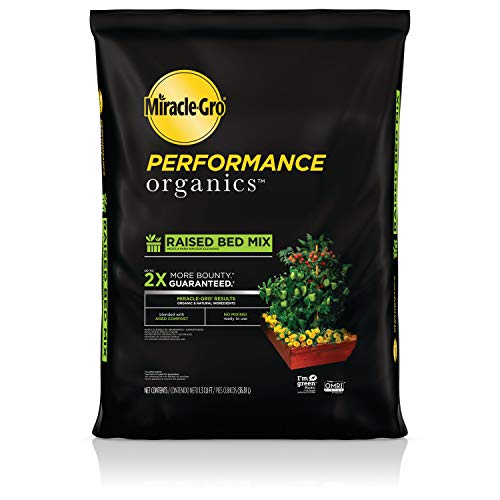
- Best for: First-time bed builders who want a compost-based fill that goes in straight from the bag.
- Bag volume: 1.3 cubic feet
- Blended with aged compost
- Formulated specifically for raised bed gardens
- Ready to use, with no mixing required

- Best for: Organic vegetable and herb beds where soil biology matters as much as texture.
- Bag volume: 1.5 cubic feet
- Base blend: aged forest products, sphagnum peat moss and perlite
- Enriched with earthworm castings, alfalfa meal, kelp meal and feather meal
- Enhanced with Myco-tone, a proprietary blend of endo and ecto mycorrhizae

- Best for: Raised beds and large containers where you want castings, shell and lime already in the fill.
- Bag volume: 1.5 cubic feet
- Item weight: 40 pounds
- Model number: RBPM1.5E
- Base: aged forest products and sphagnum peat moss make up 50 to 60 percent of the blend
All 4 Picks at a Glance
| Product | Specs | Action |
|---|---|---|
| Miracle-Gro Performance Organics Raised Bed Mix |
| Check price on Amazon |
| Espoma Organic Raised Bed Mix |
| Check price on Amazon |
| FoxFarm Raised Bed Planting Mix |
| Check price on Amazon |
 FoxFarm Happy Frog Potting Soil |
| Check price on Amazon |
Key takeaways
- Four raised bed soil mixes compared for filling new beds: compost-based, organic and microbe-rich blends with bag sizes, ingredients and best uses.
Filling a raised bed sounds like the easiest step in building one, right up until you stand in front of a bare frame doing volume maths. A standard bed swallows far more soil than most people expect, and the blend you choose decides how well it drains after a storm, how often you water in July, and whether roots get fed or sit hungry. The real decision is not which bag looks nicest, but how much you need and what is actually inside it.
This guide is for first-time bed builders, vegetable growers who want a ready-to-plant fill, organic gardeners avoiding synthetic inputs, and anyone topping off beds that sank over winter. Every pick below is a bagged soil or planting mix sold for exactly this job, chosen from the ingredients, bag sizes and intended uses stated on its Amazon listing, so you can match a blend to your bed instead of guessing at the garden centre.
Quick Picks
As an Amazon Associate we earn from qualifying purchases.
| Product | Best for | Key spec |
|---|---|---|
| Miracle-Gro Performance Organics Raised Bed Mix | A first bed you want planted the same day | 1.3 cu ft bag blended with aged compost |
| Espoma Organic Raised Bed Mix | Organic vegetable beds with living soil biology | 1.5 cu ft with Myco-tone mycorrhizae |
| FoxFarm Raised Bed Planting Mix | Gardeners who want castings and shell in the blend | 1.5 cu ft with earthworm castings and oyster shell |
| FoxFarm Happy Frog Potting Soil | Deep beds and large containers needing fewer bags | 2 cu ft bag, pH adjusted, with mycorrhizae |
How to Choose
Work Out the Volume Before You Order Anything
Measure the inside of the bed, not the outside boards: length times width times fill depth gives cubic feet. A bed four feet by eight feet filled twelve inches deep needs about thirty-two cubic feet, which is more than twenty of the common one-and-a-half cubic foot bags. Gardeners routinely under-order by a third, then either leave the bed shallow or pay for a second delivery. Soil also settles after the first few waterings, so plan for the full depth plus a little extra for topping off once the surface drops.
Read the Ingredient List, Not the Front of the Bag
Bag fronts are marketing; the guaranteed ingredient panel is the product. Look for what makes up the bulk of the blend. Aged forest products and compost give body and slow nutrition, sphagnum peat moss holds moisture, and perlite keeps the mix from packing tight. Espoma’s raised bed mix, for example, lists aged forest products as the majority of its blend with peat and perlite behind them. A filler dominated by one ingredient behaves predictably, while a long list of meals and extracts usually signals a richer, more biologically active fill.
Match Drainage Ingredients to Your Climate and Crops
Raised beds drain faster than ground soil by design, and the blend either softens or sharpens that effect. Perlite and aged bark open air pockets, which suits rainy regions and root vegetables that rot in soggy ground. Peat moss and compost pull the other way, holding water for thirsty crops like cucumbers and peppers in hot, dry spells. Check what your shortlist actually contains before assuming: two bags both labelled for raised beds can drain very differently, and retrofitting drainage into a filled bed is miserable work.
Decide How Much Feeding You Want Built In
Some fillers arrive pre-loaded with nutrition from castings, guano, kelp meal or feather meal, while plainer blends expect you to fertilise on your own schedule. A rich mix simplifies the first season, especially for heavy feeders like tomatoes and squash, but its charge fades and still needs topping up later. Plainer compost-based fills cost less per cubic foot when you are filling several beds and give you control over feeding. Decide which trade-off fits your beds before comparing bags, because it changes which shortlist makes sense.
The 4 Best Options
Miracle-Gro Performance Organics Raised Bed Mix
- Best for: First-time bed builders who want a compost-based fill that goes in straight from the bag.
- Bag volume: 1.3 cubic feet
- Blended with aged compost
- Formulated specifically for raised bed gardens
- Ready to use, with no mixing required
First-time bed builders who want a compost-based fill that goes in straight from the bag.
The 1.3 cubic foot bag is smaller than most rivals, so count bags carefully for deep beds, and check the CA availability note before ordering.
If you want a bed filled and planted in a single afternoon, this is the straightforward route. The blend is built around aged compost and is formulated specifically for raised bed gardens rather than adapted from a general potting line, so the texture suits a full-depth fill. It pours straight from the bag with no mixing step, which matters when you are working through a dozen bags. Gardeners planting their first vegetables, flowers or herbs in a new frame will appreciate how little decision-making is left once the bags are open.
Espoma Organic Raised Bed Mix
- Best for: Organic vegetable and herb beds where soil biology matters as much as texture.
- Bag volume: 1.5 cubic feet
- Base blend: aged forest products, sphagnum peat moss and perlite
- Enriched with earthworm castings, alfalfa meal, kelp meal and feather meal
- Enhanced with Myco-tone, a proprietary blend of endo and ecto mycorrhizae
Organic vegetable and herb beds where soil biology matters as much as texture.
The organic meals feed gradually rather than instantly, so very heavy feeders may still want a feeding plan once plants are established.
Espoma built this mix for organic growers who treat the fill itself as part of the feeding programme. Aged forest products make up the bulk of the blend, with sphagnum peat moss and perlite rounding out the structure, and the recipe is enriched with earthworm castings plus alfalfa, kelp and feather meals. Its signature addition is Myco-tone, the company’s blend of endo and ecto mycorrhizae intended to colonise roots as they grow into the new soil. Vegetable and herb growers who avoid synthetic fertilisers will find this the most complete organic fill on the list.
FoxFarm Raised Bed Planting Mix
- Best for: Raised beds and large containers where you want castings, shell and lime already in the fill.
- Bag volume: 1.5 cubic feet
- Item weight: 40 pounds
- Model number: RBPM1.5E
- Base: aged forest products and sphagnum peat moss make up 50 to 60 percent of the blend
Raised beds and large containers where you want castings, shell and lime already in the fill.
Each bag weighs forty pounds, so a multi-bag fill is heavy work; stage the bags beside the bed before you start.
FoxFarm’s dedicated raised bed blend takes a mineral-aware approach that suits gardeners who think about calcium and pH alongside texture. Aged forest products and sphagnum peat moss form the base, while the fertiliser component is derived from earthworm castings, oyster shell and dolomite lime, ingredients more often found in amended garden soils than in bagged fills. The mix is ready to use for vegetables, flowers, fruits and herbs in raised beds or containers. At forty pounds a bag it is a dense, substantial fill, so plan your lifting and wheelbarrow runs accordingly.
FoxFarm Happy Frog Potting Soil
- Best for: Deep beds and large containers where a bigger bag means fewer trips and less packaging.
- Bag volume: 2 cubic feet
- Model number: FX14047
- Ingredients: aged forest humus, sphagnum peat moss, perlite, earthworm castings and guano
- pH adjusted for optimal nutrient uptake
Deep beds and large containers where a bigger bag means fewer trips and less packaging.
It is a container potting soil rather than a dedicated bed mix, so for very large beds consider blending it with compost to stretch coverage.
Happy Frog is the generalist of this group: a potting soil rather than a bed-specific blend, but its two cubic foot bag is the largest here, which cuts the bag count on deep beds and big containers. The recipe leans on aged forest humus with sphagnum peat moss and perlite, amended with earthworm castings and guano, and it is pH adjusted with mycorrhizae and humic acids in the mix. Gardeners filling several beds, or blending a bought mix with their own compost, often prefer this bigger bag format for the simpler logistics alone.
Which One Fits Your Situation
You Are Building a Brand-New Vegetable Bed
Start with the Miracle-Gro Performance Organics Raised Bed Mix if planting day is the priority, since it goes in with no mixing and its compost base suits a first season of vegetables. If the bed is deep, run the volume maths twice and order for the full depth plus settling. Gardeners who would rather build soil biology from day one should step up to the Espoma mix instead.
You Garden Organically and Avoid Synthetic Inputs
The Espoma Organic Raised Bed Mix is the natural pick here. Its ingredient panel is built from forest products, peat, perlite and organic meals, and the Myco-tone mycorrhizae are there to support roots without synthetic fertiliser. Everything in the bag aligns with an organic programme, so you can fill the whole bed in one pass and keep your feeding strategy consistent from the first watering onward.
Your Existing Beds Sank Over Winter
Settled beds need a top-up, not a rebuild, so choose the blend closest to what is already in the frame to keep drainage consistent. The FoxFarm Raised Bed Planting Mix suits beds that were originally filled with a castings-rich blend, and its oyster shell and dolomite lime suit soil that has been cropping for a season. Add the new fill a few inches at a time around established perennials.
You Are Filling Several Beds or Very Large Containers
Bag count becomes the chore here, which is where the FoxFarm Happy Frog Potting Soil earns its place: two cubic feet per bag means noticeably fewer bags to haul, open and recycle across a big project. Its humus and perlite base also blends smoothly with homemade compost if you are stretching bought mix across multiple beds, keeping texture even while the total volume climbs.
Common Mistakes
- Under-ordering bags because the bed was measured by its outside boards or the settling allowance was skipped, leaving the fill several inches below the rim.
- Filling a bed with plain topsoil or an in-ground garden soil, which compacts in a raised frame and drains poorly compared with a purpose-made blend.
- Switching between different mixes halfway through one bed, creating layers that hold and release water at different rates.
- Planting immediately after filling without watering the bed down, so the first real settling happens around young roots.
- Ignoring regional availability notes and bag-size differences on listings, then discovering mid-project that the chosen mix cannot be reordered locally.
Frequently Asked Questions
How much filler does a four-by-eight raised bed need?
Multiply length by width by depth in feet. A four-by-eight bed filled twelve inches deep holds about thirty-two cubic feet, which works out to roughly twenty-two bags of a one-and-a-half cubic foot mix. At six inches deep, halve that figure. Always add a spare bag or two, because fresh fill settles noticeably after the first few waterings.
Can regular potting soil be used to fill a raised bed?
Yes, provided it is a quality mix with drainage ingredients such as perlite, like the FoxFarm Happy Frog in this guide. Potting soils are formulated for containers, and a raised bed behaves like a very large container. For big beds, many gardeners blend potting mix with compost to manage the volume, but the fill still needs to drain freely and hold some moisture.
Should raised bed filler be replaced every year?
No. A good fill lasts for years and improves as roots, worms and microbes work through it. What it needs is topping up: beds typically sink a little each season as organic matter breaks down, so add an inch or two of fresh mix or compost in spring. Replace the fill only if drainage has collapsed or diseased plants were removed from it.
Is a dedicated raised bed mix better than a homemade blend?
A bagged raised bed mix offers consistency: every bag drains and feeds the same way, and it arrives ready to pour. Homemade blends built from compost, peat or coir and an aeration ingredient can work just as well when the proportions are right, but the quality depends entirely on the compost source. Many gardeners fill with bags first, then maintain with homemade material.