
Key takeaways
- Budget: Basic folding screens with light frames and fabric or plastic panels. Fine for occasional use and for renters who move often.
- Mid-range: Larger panels, wood frames, adjustable feet and thicker fabric. Better when the screen stays up daily.
- Premium: Solid wood or woven panels, hand finishing and sometimes custom sizes. Worth it when the divider is a main decor piece.
For most buyers shopping the best room divider under $150, a folding or freestanding screen in the 150 cm to 216 cm width range is the right category, with the IKEA GLAMBERGET suiting small shared spaces that need soft, fabric-based separation and the IKEA RISÖR suiting wide openings that need a taller, longer screen. A handmade rattan screen such as IKEA TOLKNING suits buyers who want texture and airflow more than privacy. Whether any of these lands under the cap depends on current listings, so this guide focuses on stated dimensions, materials and trade-offs that matter regardless of the price tag.
Our top picks


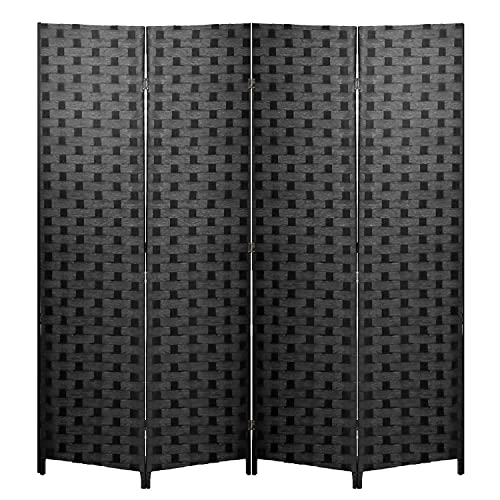

As an Amazon Associate we earn from qualifying purchases at no extra cost to you.
What a divider can and cannot do
A room divider is a visual boundary. It can hide a desk, a bed corner or a clutter zone from view, soften light and give a sense of separation in a studio or shared bedroom. It does not block sound in a meaningful way, it does not insulate against cold or heat, and it should not be treated as a fire barrier or a safety partition. Keep any divider clear of heaters, stoves, candles and fireplaces, and follow the maker’s instructions for use. If you want a divider between a play area and a hazard such as stairs, that is a child-safety product category with its own standards, not a decorative screen.
At a glance: confirmed current options
| Model | Best for | Key stated specs | Limits |
|---|---|---|---|
| IKEA GLAMBERGET | Shared bedrooms, studio corners, light privacy | The maker lists 150 x 150 cm, three panels, four poles, beige fabric on a wooden frame, adjustable feet; package about 5 kg | Fabric is described by some buyers as slightly thin; it blocks view and light, not noise |
| IKEA RISÖR | Wide openings, long walls, entry zones | The maker lists 216 cm wide, 185 cm high, solid pine frame with plastic filling; a heavier two-person carry | Folding screens tend to show gaps at the folds; filling material is listed differently on some regional pages |
| IKEA TOLKNING | Decor-led separation, airy spaces | The maker lists a handmade rattan screen, 150 cm wide by 170 cm high (about 59 by 67 in), on a powder-coated steel frame; sections must be folded for it to stand | Open weave, so privacy is limited |
| IKEA NÄMMARÖ privacy screen | Balcony, patio or covered porch | The maker lists it as a freestanding indoor/outdoor screen of slatted acacia wood, about 80 cm wide and 140 cm high | Slatted design leaves gaps; it screens sightlines rather than blocking them, and it is shorter than a standing adult |
GLAMBERGET: the compact fabric screen
GLAMBERGET is listed at 150 cm by 150 cm with three panels held by four poles. The maker says the poles and adjustable feet let you angle the screen in different ways, which helps in a corner or on a slightly uneven floor. Beige fabric on a wood frame gives a soft look, and the package weight of roughly 5 kg means one person can carry it. Reviewers note that the fabric is somewhat thin but keeps light out reasonably well, which suits a bedroom corner where someone sleeps while another person reads.
The trade-off is mass. A light screen can tip if bumped, so keep it out of walkways and away from small children and pets who might pull on it. Use the feet to level it and follow the maker’s assembly guidance.
RISÖR: the wide folding screen
RISÖR is a larger folding screen at 216 cm wide and 185 cm high, with a solid pine frame and a plastic filling. It is a large piece, so plan a two-handed carry. At 185 cm high it is taller than the average adult, which is useful for hiding a work area from a seating area. Listings differ on the filling material: some regional pages say polystyrene, another says polypropylene, so read the page for your market if material matters to you. Folding screens tend to leave gaps at the fold lines, so it gives separation more than true privacy. If you need to block sightlines fully, hang a cloth over the top rail or place the screen so the folds are not at eye level.
TOLKNING and outdoor screens: texture, not privacy
TOLKNING is a handmade rattan divider. Rattan adds warmth and filters light, but the weave is open, so expect to see through it. It works as a design element and to break up a long room, not to hide a bed or a desk. The slatted NÄMMARÖ is listed by the maker for indoor and outdoor use at about 80 cm wide and 140 cm high; slatted types leave gaps, so treat it as a balcony or entry sightline breaker rather than a full screen. Place any freestanding screen where it cannot be pulled over.
Budget, mid-range and premium tiers
- Budget: Basic folding screens with light frames and fabric or plastic panels. Fine for occasional use and for renters who move often.
- Mid-range: Larger panels, wood frames, adjustable feet and thicker fabric. Better when the screen stays up daily.
- Premium: Solid wood or woven panels, hand finishing and sometimes custom sizes. Worth it when the divider is a main decor piece.
Compare any current listing against the cap in the title before deciding. Do not assume a screen of a stated size fits the cap just because it is plastic or fabric.
Fit and size notes
- Width when open: Measure the opening and add a little extra, since a folded screen’s usable length is shorter than the stated width.
- Height: 150 cm blocks sitting sightlines; around 185 cm blocks standing sightlines for most adults.
- Zigzag stability: Fold the screen into a zigzag rather than a straight line for the best balance.
- Heat and flames: Keep fabric and plastic screens away from heaters, candles and stoves, and follow the manual.
- Rental rules: A freestanding screen needs no drilling, which makes it suitable for most leases.
Pick X if you…
| If you… | Pick | Why |
|---|---|---|
| Share a bedroom and want a light-blocking corner | GLAMBERGET | Fabric panels and adjustable angle |
| Need to hide a desk behind a sofa | RISÖR | Tall and wide at 216 by 185 cm |
| Want a decor piece that lets light through | TOLKNING | Handmade rattan, open weave |
| Need a balcony screen | NÄMMARÖ | Listed for indoor and outdoor use |
| Need to block a child hazard | A child-safety gate, not a screen | Decor screens are not designed for it |
Using a divider in common situations
In a studio apartment, a screen set across the sleeping area gives a feeling of a separate room, and a taller model keeps the bed out of view from the door. In a shared bedroom, a fabric screen between two beds cuts light from a reading lamp and gives a little visual privacy, although it will not stop noise. In a home office corner, a screen behind the desk hides cables and clutter during video calls, and a plain fabric panel makes a tidier background than a busy shelf. At an entry, a screen can block sightlines into the living room without construction.
Place the screen where it cannot be knocked by a door, and fold it into a zigzag for balance. Keep pets in mind: a lightweight screen is easily pushed over by a running dog or a child, so pick a spot out of play areas and use any feet or stabilizers the maker provides.
Care and common mistakes
- Dust fabric panels with a soft brush or vacuum attachment; follow the care label for stains.
- Do not hang heavy items on a light frame unless the maker allows it.
- Measure the open width, not just the folded stack, before ordering.
- Expect gaps at fold lines on many screens; angle them so the gaps are not at eye level.
Alternatives
- Curtain on a ceiling track: Better for true privacy and sound softening; needs drilling.
- Open bookshelf as a divider: Adds storage; anchor tall units to the wall per the maker’s instructions.
- Tall plants: Soft separation, little privacy, needs light and care.
Frequently Asked Questions
Will a room divider block sound?
Not in any meaningful way. Fabric and wood screens break line of sight and soften light, but sound passes through and around them. For noise, use rugs, curtains or acoustic panels in addition.
How tall should a divider be?
For hiding a seated person, about 150 cm is enough. For hiding someone standing, look for roughly 180 cm or higher, such as the 185 cm RISÖR. Taller screens need more stable footing and wall clearance.
Is a folding screen stable on carpet?
Generally yes if you fold it into a zigzag. Models with adjustable feet, like the GLAMBERGET, help on uneven floors. Keep it away from play areas where it might be pulled over.
Can I use a divider outdoors?
Only if the maker lists it for outdoor use. IKEA lists NÄMMARÖ for indoor and outdoor use, while fabric and rattan indoor screens are not made for rain. Follow care instructions.
Does a divider replace a door or a safety barrier?
No. A decorative screen offers visual separation only. It is not a fire partition, a child gate or a security measure, so keep it clear of heat sources and exits.
How do I get more privacy from an open-weave screen?
Layer it with a sheer or opaque fabric panel, or place the screen where lighting is behind the viewer rather than behind the screen. Many open-weave screens are better used for style than for hiding.


