Key takeaways
- Three true online double-conversion UPS units compared for small office computers: clean sine wave output, zero transfer time and room to add runtime.
Most small offices buy a battery backup after the first outage eats a morning of work, and the real decision is not how big the box is but what kind of power it makes. Cheap standby and line-interactive units pass raw wall power through until something goes wrong, so sags, brownouts and generator noise still reach your computers. An online double-conversion UPS rebuilds the power continuously, which is why it costs more and protects better.
This guide is for owners and office managers running a handful of desktops, a small server or NAS, and the router and switch that tie them together. Every pick below is a true online double-conversion model sold on Amazon, chosen from the specifications in its listing — capacity in watts, outlet count, stated runtime and battery expansion options — and the list deliberately leaves out line-interactive and standby units, however they are labelled in a headline.
Quick Picks
As an Amazon Associate we earn from qualifying purchases
| Product | Best for | Key spec from title |
|---|---|---|
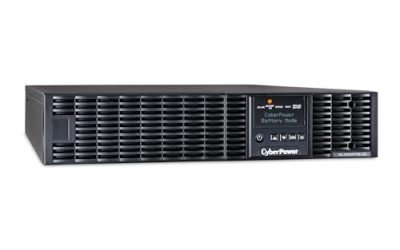
| CyberPower OL1000RTXL2U | Rack or tower installs needing the most outlets | 1000VA/900W with 8 outlets in a 2U rack/tower case |
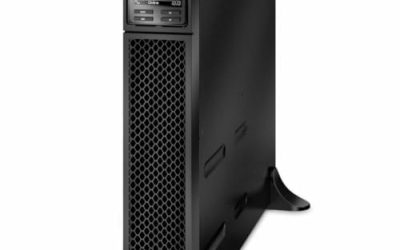
| APC Smart-UPS On-Line SRT1000XLA | The longest built-in runtime at this size | 1000VA/900W tower with 6 outlets and a SmartSlot |
| Tripp Lite SmartOnline SU1000XLCD | Remotely rebooting hung PCs and network gear | 1000VA/900W tower with 6 outlets and switched load banks |
How to Choose
Confirm the topology before anything else
“Online” gets used loosely in listings, so check the topology field rather than the headline. A true online double-conversion UPS converts incoming AC to DC and back to AC full time, so the output is a clean sine wave with zero transfer time when the power fails. Line-interactive and standby designs are cheaper and fine for a single home PC, but they pass utility power through in normal use and switch to battery with a small delay. For office computers that drop offline during brownouts, only the double-conversion design removes that gap entirely and isolates the load from noise, sags and frequency drift.
Size the unit in watts, not volt-amps
Listings headline the VA figure, but your computers draw watts, and the two numbers differ on every model here: each 1000VA pick is rated at 900W. Add up the realistic draw of everything on battery — a desktop under load, its monitors, the NAS and the network switch — and keep the total under about 80 percent of the watt rating so the unit is not running at its limit. A single workstation fits comfortably on 900W; two busy desktops plus screens can crowd it, which is when stepping up a size beats adding a second small unit later.
Decide how much runtime you actually need
Internal batteries on units this size are measured in minutes, not hours: the picks below state between about 7 and 11 minutes at full load and roughly 19 to 25 minutes at half load. That is enough to save work and shut down cleanly, which is the real job. If your office regularly sits through longer outages, look for a model with external battery pack support and price that expansion into the decision now, because retrofitting a closed unit later usually means replacing it. Runtime falls fast as load rises, so a lightly loaded unit buys disproportionately more time.
Plan monitoring and graceful shutdown
A UPS only protects data if the computers know the power is failing. All three picks connect by USB for basic shutdown signalling to a single PC, and the APC and Tripp Lite designs add a slot for an optional network management card, which can send shutdown commands to several machines and email alerts when the unit goes on battery. Decide before you buy whether one USB-tethered computer is enough or whether a server, NAS and second desktop all need the message. Also check the display: a front LCD showing load and runtime beats guessing from beeps.
The 3 Best Options
CyberPower OL1000RTXL2U

The CyberPower OL1000RTXL2U is the flexible install of the three: its 2U case works in a small rack or standing as a tower, and its eight outlets are the most here, enough for two desktops with monitors plus network gear on one unit. Output voltage is selectable, the multifunction LCD rotates for either orientation, and an ECO mode trims the unit’s own power draw when conditions allow. Runtime is mid-pack, but the chassis accepts CyberPower extended battery modules, so a closet setup can grow from minutes to much longer without swapping the UPS itself.
Specs
- Capacity: 1000VA / 900W
- Topology: online double-conversion, sine wave output
- Outlets: 8 × NEMA 5-15R; input: NEMA 5-15P with 10 ft cord
- Runtime: 7.4 minutes at full load, 20 minutes at half load
- Form factor: 2U rack/tower convertible
- Output: selectable 100/110/115/120/125V, 50/60 Hz
- Expansion: optional BP36V60ART2U battery modules, up to 10
Best for: A small rack or shelf where one unit must cover several devices
Watch out for: Battery modules are sold separately, and the internal battery alone gives under 8 minutes at full load
ASIN: B009ACPD3I
APC Smart-UPS On-Line SRT1000XLA

The APC Smart-UPS On-Line SRT1000XLA is the runtime pick. Its stated figures — 10.5 minutes at full load and 25.4 minutes at half load — are the longest of the three on internal battery alone, which suits a small server or a workstation that needs an unhurried, graceful shutdown. The tower case includes a SmartSlot for APC’s optional network management card, a built-in bypass keeps power flowing even during a UPS fault, and the design accepts up to ten external SRT48BP battery packs. It has fewer outlets than the CyberPower, so count plugs before choosing it for a whole desk cluster.
Specs
- Capacity: 1000VA / 900W
- Topology: double-conversion online, sine wave output
- Outlets: 6 × NEMA 5-15R; input: NEMA 5-15P with 6 ft cord
- Runtime: 10.5 minutes at full load, 25.4 minutes at half load
- Management: SmartSlot for an optional network card; built-in bypass
- Expansion: up to 10 SRT48BP external battery packs; replacement battery APCRBC155
- Surge rating: 432J
Best for: A small server or key workstation that needs the longest standard ride-through
Watch out for: Rack mounting needs a separate rail kit; the unit ships as a tower
ASIN: B072MJDZCK
Tripp Lite SmartOnline SU1000XLCD

The Tripp Lite SmartOnline SU1000XLCD is the pick for gear that occasionally needs a remote kick. Two of its six outlets sit on individually switched load banks, so a hung router, switch or PC can be power-cycled from the management interface instead of waiting for someone to reach the office. It is a tower-only design with a front LCD, USB and serial connections, and a slot for Tripp Lite’s optional network card. Stated runtime is the shortest here at full load, though at the half loads a single workstation typically draws it stretches to 18.5 minutes.
Specs
- Capacity: 1000VA / 900W
- Topology: online double-conversion, pure sine wave output
- Outlets: 6 × NEMA 5-15R, including two switched load banks; input: NEMA 5-15P with 10 ft cord
- Runtime: 6.7 minutes at full load, 18.5 minutes at half load
- Output: selectable 100/110/120/127V with ±2% regulation
- Connections: USB and DB9 serial; slot for an optional network management card
- Expansion: extended-run external battery pack options
Best for: A workstation and network corner where remote reboot matters
Watch out for: Shortest full-load runtime of the three; size loads conservatively
ASIN: B00COIZW4A
Which One Fits Your Situation
You have a small rack in a network closet
Choose the CyberPower OL1000RTXL2U. Its 2U rack/tower chassis mounts alongside your switch and patch panel instead of taking floor space, and eight outlets cover a couple of desktops or a server plus the network stack. The rotating LCD stays readable in either mounting position. If outages run long, bolt on BP36V60ART2U battery modules later rather than replacing the unit.
One server has to shut down gracefully, every time
Choose the APC SRT1000XLA. It holds the longest stated runtime here, which gives a small server time to close files and power off in order, and the SmartSlot accepts a network card so the shutdown signal can reach machines that are not USB-tethered to the UPS. Add SRT48BP packs if the server room must ride through longer cuts.
The router or a PC keeps freezing after hours
Choose the Tripp Lite SU1000XLCD. Its two switched load banks let you cut and restore power to a single outlet group remotely, which is the standard fix for a hung router or a frozen front-desk PC when nobody is on site. The rest of the outlets keep protecting the workstation beside it.
Your building power is rough, with sags and a generator
Any of the three will isolate your computers, because double conversion rebuilds the output continuously, but the CyberPower OL1000RTXL2U is the natural fit: it is generator compatible, holds a selectable output voltage, and its wide input handling means the battery is not drained by every sag. Offices on generator backup should still confirm the generator’s own output is stable enough for the transfer back to utility power.
Common Mistakes
- Buying a line-interactive unit whose listing headline says “online” — check the topology specification in the product details, not the marketing line.
- Sizing by the VA number alone and overloading the lower watt rating, which leaves the unit at its limit exactly when the power fails.
- Plugging a laser printer or space heater into the battery-backed outlets; their draw can overload the unit or drain it in seconds.
- Expecting the internal battery to run the office for hours — it is sized for saving work and shutting down, unless you add external packs.
- Leaving the USB or network shutdown signalling unconfigured, so the PCs never learn the power has failed and run until the battery dies.
Frequently Asked Questions
What is the difference between an online UPS and a line-interactive one?
An online double-conversion UPS converts all incoming power to DC and back to AC continuously, so computers always run on clean, regulated power and there is no transfer delay when the mains fail. A line-interactive unit passes utility power straight through, corrects minor voltage swings with a transformer, and switches to battery only when the power actually drops — cheaper, but the load still sees most disturbances.
How long will one of these run a small office PC?
At a typical single-workstation load of around half the unit’s rating, the picks here state roughly 19 to 25 minutes — enough to finish, save and shut down in an orderly way. Runtime shrinks quickly as you add machines: at full load the same units state about 7 to 11 minutes. For longer cover, choose a model with external battery pack support.
Can I plug one of these into a normal office wall socket?
Yes. All three picks use a standard NEMA 5-15P plug and run from an ordinary 15-amp office circuit, with no electrician or special wiring needed. Keep the circuit sensible: the UPS and the computers it protects are a reasonable load, but avoid sharing the same circuit with a kettle, heater or laser printer that cycles heavy current.
When should the battery be replaced?
Sealed lead-acid batteries in units like these typically last three to five years; APC states a three-to-five-year battery life for the SRT1000XLA. The UPS will warn you through its display and self-tests as capacity fades. All three picks use replaceable battery cartridges or modules, so a worn battery means swapping the pack, not replacing the whole UPS.