Key takeaways
- Four rimfire scopes matched to .22 WMR rifles, compared on parallax, reticle and glass, with listing specs for each pick and notes on rings and mounting.
A scope for a .22 WMR is really a decision about distance. The magnum rimfire shoots flatter and faster than a .22 LR, so most shots land between 50 and 150 yards — yet the scope still has to stay sharp and parallax-free at 50 yards, where a centerfire scope focused for 100 yards or more will blur and shift. Pick the wrong focus distance and the rifle groups well on paper at one range and wanders at another. That single choice shapes every pick below.
This roundup is for .22 WMR owners choosing a first scope, small-game hunters who walk fields, and farmers clearing pests around buildings and feed. Each scope below was picked from its Amazon listing name and printed specifications — magnification range, objective size, reticle type and parallax setting — and every model is a dedicated rimfire design rather than a centerfire scope pressed into rimfire service.
Quick Picks
As an Amazon Associate we earn from qualifying purchases.
| Product | Best for | Key spec from title |
|---|---|---|
| Vortex Crossfire II 2-7×32 Rimfire | All-round .22 WMR hunting | 2-7×32, V-Plex reticle |
| Leupold VX-Freedom Rimfire 2-7×33 | Low-light small game | 2-7×33, Rimfire MOA reticle |
| Simmons Pro Rimfire 3-9×32 | Holdover marks out to 125 yards | 3-9×32, .22 Drop Zone reticle |
| Simmons .22 Mag 3-9×32 | Lightweight walk-around rifles | 3-9×32, Truplex reticle |
How to Choose
Parallax Set for Rimfire Distances
Parallax is the quiet accuracy killer on rimfire rifles. Most centerfire scopes leave the factory focused at 100 or 150 yards, so at 50 yards the crosshair can drift against the target as your head moves behind the eyepiece. Dedicated rimfire scopes fix the focus closer: 50 yards on three picks here, 60 yards on the Leupold. The .22 WMR spends most of its life between 40 and 125 yards, so a 50 or 60 yard setting keeps the reticle honest across that whole span. If you shoot mostly at 25 yards indoors, look for an adjustable objective instead.
Magnification That Matches the Cartridge
The .22 WMR carries useful energy well past 100 yards, which tempts buyers toward high magnification. Resist the top end. A 2-7x or 3-9x range covers everything this cartridge does well: 2x or 3x keeps a wide field of view for rabbits moving through cover, while 7x or 9x is enough to place a shot on a ground squirrel at 125 yards. Bigger glass also means a bigger, heavier tube on rifles that are usually carried more than they are shot. Every scope in this roundup stays inside that 2-7x to 3-9x window on purpose.
Plain Crosshair or Drop Marks
Reticle choice splits into two camps. Plain designs — the V-Plex on the Vortex and the Truplex on the Simmons .22 Mag — give one clean aiming point and suit a 50 or 75 yard zero on moving small game. Drop designs add reference marks below center: the Simmons .22 Drop Zone prints aiming points every 25 yards out to 125, and the Leupold Rimfire MOA spaces marks in MOA steps. Those marks were drawn around rimfire trajectories, but the .22 WMR flies flatter than a .22 LR, so treat printed holds as a starting point and confirm each one at the range with your load.
Tube Size, Rings and Mounting Height
All four scopes here use a 1-inch tube, which keeps weight down and matches the ring selection stocked for rimfire rifles. What changes is what arrives in the box. Both Simmons models include rings; the Vortex and Leupold expect you to supply your own. Check the ring interface against your receiver before ordering: many .22 WMR rifles wear a 3/8-inch dovetail groove, others take Weaver or Picatinny bases, and the two do not interchange. Mounting height matters on bolt guns too — a 32 or 33mm objective sits low and clears the bolt handle, while oversize glass forces taller rings and a worse cheek weld.
The 4 Best Options
Vortex Crossfire II 2-7×32 Rimfire
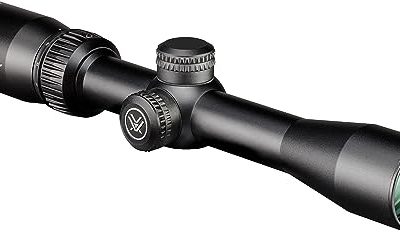
The Crossfire II Rimfire is the safe pair of hands in this group: a 2-7×32 built on a single-piece aluminum tube, with fully multi-coated lenses and a plain V-Plex reticle that never crowds a small target. Its 50-yard parallax setting matches where .22 WMR rifles actually work, and the capped turrets reset to zero after sighting in, so a knock in the truck does not become a mystery at the next fence line. For a bolt-action magnum that hunts rabbits one weekend and punches paper the next, this is the balanced default.
Specs
- Magnification: 2-7x
- Objective lens diameter: 32 mm
- Reticle: V-Plex (MOA)
- Tube: 1 inch, single-piece aircraft-grade aluminum
- Lens coating: fully multi-coated
- Turrets: capped, finger adjustable with MOA clicks, resettable to zero
- Parallax setting: 50 yards
- Sealing: O-ring sealed and nitrogen purged; waterproof and fogproof
Best for: Hunters who want one rimfire scope that covers small game and range use without extra features to manage.
Watch out for: The V-Plex reticle has no holdover marks, and rings are a separate purchase, so confirm your mount before ordering.
ASIN: B00794LKMW
Leupold VX-Freedom Rimfire 2-7×33
The VX-Freedom Rimfire is the step-up glass here, built for shooters who hunt the first and last minutes of light. Leupold sets its parallax at 60 yards rather than 50, a small shift that suits the .22 WMR’s longer working distances, and the Rimfire MOA reticle spaces its marks in even MOA steps for holdover. The Twilight Light Management System in the listing is aimed at dawn and dusk, when rabbits and foxes move. Finger clicks adjust in quarter-MOA steps, and the scope is waterproof, fogproof and shockproof.
Specs
- Magnification: 2-7x
- Objective lens diameter: 33 mm
- Reticle: Rimfire MOA
- Parallax: fixed at 60 yards
- Adjustment clicks: 1/4 MOA finger clicks
- Light management: Twilight Light Management System
- Construction: waterproof, fogproof and shockproof
- Finish: matte black
Best for: Small-game hunters who shoot at dawn and dusk and want finer glass on a working .22 WMR.
Watch out for: The fixed 60-yard focus is tuned for field distances, so very close 25-yard shots deserve a parallax check before a pest-control zero.
ASIN: B079G3Z3P4
Simmons Pro Rimfire 3-9×32
The Pro Rimfire is Simmons’ current rimfire design, and its .22 Drop Zone reticle is the reason to pick it. The listing sets the zero at 50 yards with aiming points every 25 yards out to 125, which maps neatly onto the distances a .22 WMR covers on pests and small game. The one-piece aluminum tube carries an all-glass, fully coated optical system, the housing is sealed to IPX7, and the box includes 1-inch Weaver-style rings and lens covers, so the scope can go straight onto a railed receiver the day it arrives.
Specs
- Magnification: 3-9x
- Objective lens diameter: 32 mm
- Reticle: .22 Drop Zone, zeroed at 50 yards with aiming points every 25 yards to 125 yards
- Parallax: fixed at 50 yards
- Tube: one-piece 1-inch aluminum
- Optics: all-glass system, fully coated lenses
- Weather resistance: IPX7 waterproof, fog-proof and shockproof
- Included: 1-inch aluminum Weaver-style rings and lens covers
- Item weight: 16 ounces
Best for: Pest control and small game at changing distances, where printed holdover points save dialing.
Watch out for: The Drop Zone marks follow a rimfire trajectory reference, and the flatter .22 WMR will not land on every mark exactly, so confirm your holds at the range.
ASIN: B0D3VCFB99
Simmons .22 Mag 3-9×32
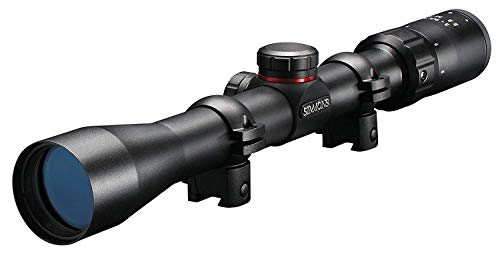
The .22 Mag line is the scope family named for this cartridge — dealer listings for this model are titled 22 WMR outright — and it stays in print because the formula is simple. A 3-9×32 Truplex scope on a 1-inch tube, fully coated glass, a Quick Target Acquisition eyepiece and the TrueZero adjustment system, all at 9.6 ounces. Rimfire rings are included in the box, the parallax is set at 50 yards, and the whole package suits a light lever or bolt rifle that gets carried all afternoon rather than shot from a bench.
Specs
- Magnification: 3-9x
- Objective lens diameter: 32 mm
- Reticle: Truplex
- Tube size: 1 inch
- Eye relief: 3.75 inches
- Field of view: 31.4-10.5 ft at 100 yards
- Click value: 1/4 MOA
- Parallax setting: 50 yards
- Item weight: 9.6 ounces
- Optics: fully coated, Quick Target Acquisition eyepiece, TrueZero adjustments
- Included: rimfire rings
Best for: Lightweight .22 WMR rifles that are carried far and shot at honest rimfire distances.
Watch out for: The included rings fit a 3/8-inch dovetail groove, so rifles with Weaver or Picatinny bases need different rings.
ASIN: B000KOSB34
Which One Fits Your Situation
Walking Fields for Rabbits and Squirrels
Weight and field of view decide these days. The Simmons .22 Mag keeps the rifle light at 9.6 ounces and its plain Truplex crosshair stays fast on moving game inside 75 yards. If your walks mix in open-field shots past 100 yards, the Vortex 2-7×32 Rimfire gives up a little simplicity for better glass and turrets that reset to zero.
First and Last Light Around the Farm
Shots at dawn and dusk punish dim glass. The Leupold VX-Freedom Rimfire pairs its Twilight Light Management System with a 60-yard parallax setting that matches magnum distances, and its Rimfire MOA marks give a hold reference when a fox crosses the far fence line. Zero it at 75 yards and most farm shots need no turret work at all.
Pest Control at Mixed Distances
Ground squirrels at 40 yards and crows at 120 ask for holdover, not turret spinning. The Simmons Pro Rimfire prints Drop Zone aiming points every 25 yards out to 125, and its included Weaver rings mount straight onto a railed receiver. Confirm each mark with your chosen load once, write the real distances on a card, and the system stays honest.
A First Scope for a Young Shooter
Simple controls beat long feature lists for a learner. The Vortex Crossfire II Rimfire keeps a plain V-Plex reticle, capped turrets that reset to zero, and a forgiving eye box from its long eye relief design. It also keeps the rifle’s balance familiar, since the 32mm objective mounts low in standard 1-inch rings on most rimfire receivers.
Common Mistakes
- Bolting on a centerfire scope with a 100-yard parallax setting, then fighting fuzzy targets and shifting groups at 50 yards.
- Trusting .22 LR drop marks as exact .22 WMR holds; the magnum shoots flatter, so verify each mark at the range.
- Ordering rings for the wrong interface — 3/8-inch dovetail grooves and Weaver or Picatinny bases are not interchangeable.
- Chasing 12x or higher magnification that narrows the field of view and adds weight a rimfire rifle does not need.
- Mounting the scope so far forward that the bolt handle or a short stock leaves you craning into the eye box.
Frequently Asked Questions
Can I use a centerfire scope on a .22 WMR?
You can mount one, and the recoil will not harm it, but the focus distance works against you. Centerfire scopes are usually set parallax-free at 100 or 150 yards, so at 50 yards the image softens and the crosshair can appear to move. A rimfire scope set at 50 or 60 yards removes both problems at the distances this cartridge is used.
Is 3-9x too much magnification for a .22 WMR?
No. The magnum holds a flat enough path to make 9x useful on small targets at 100 to 125 yards, such as ground squirrels or crows on a fence post. The low end matters just as much: 3x keeps a wide field of view for rabbits in cover. A 2-7x covers the same ground with a little less reach at the far end.
What zero distance works best for a .22 WMR?
A 75-yard zero is the common compromise: the bullet stays close to the line of sight from 25 yards out past 100, so most small-game shots need no hold adjustment. Hunters who shoot mainly at 50 yards can zero there instead and hold slightly high at 125. Either way, confirm the zero and the hold points with the exact load you hunt with.
Do I need special rings for a rimfire scope?
Only the interface has to match. Rimfire scopes use 1-inch tubes, and the rings must suit your receiver: a 3/8-inch dovetail groove, a Weaver base or a Picatinny rail. Two picks here include rings, the Simmons models, while the Vortex and Leupold need rings bought separately. Medium height usually clears a 32 or 33mm objective and the bolt handle.