Key takeaways
- Compare five lawn aerators, from tow-behind plug models to a manual core tool and an electric dethatcher, and find the right fit for your lawn.
A lawn that looks tired, thin, or patchy is suffering below the surface. Foot traffic, mowing, and heavy rain press soil particles together until air, water, and nutrients can no longer reach the roots. Grass responds with shallow roots, thinning turf, and weeds moving in. Aeration opens the soil back up, and the right tool makes the job far easier than it sounds.
The five tools below cover the main ways to get air into the ground: tow-behind plug models for large lawns, a manual core tool for small yards and trouble spots, a spike aerator for softer soil, and an electric dethatcher for lawns buried under thatch. The best pick depends on your yard, not any single feature.
As an Amazon Associate, we earn from qualifying purchases.
Quick Answer
For large lawns, a tow-behind plug aerator pulled by a riding mower is the fastest way to relieve compaction. Small yards and worn patches are better served by a manual core tool, while soft or sandy soil responds well to a spike aerator. If dead grass is smothering your turf, an electric dethatcher clears it so air and water can reach the soil again.
1. Agri-Fab 45-0299 48-Inch Tow Plug Aerator
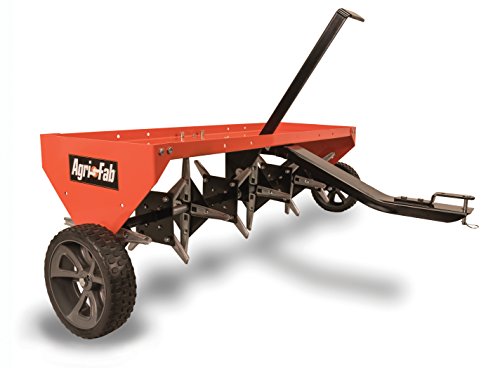
The Agri-Fab 45-0299 is the widest tool in this guide. Pulled behind a lawn tractor or riding mower, it covers a 48-inch path in a single pass, so a large lawn takes far fewer laps than with a narrower unit. Its 32 galvanized knives pull plugs about three inches deep, leaving open channels that let water and nutrients reach the roots.
A universal hitch fits most lawn and garden tractors, and a weight tray adds ballast for deeper penetration on hard clay. As a tow-behind unit, it needs a tractor or riding mower and room to turn, so it fits large, open lawns far better than small or heavily planted yards.
Key Specs
| Spec | Detail |
|---|---|
| Aeration type | Plug (core) |
| Working width | 48 in |
| Plug depth | About 3 in |
| Tines | 32 galvanized knives |
| Hitch | Universal |
| Weight tray capacity | Not stated |
| Made in | USA |


2. Brinly PA-40BH 40-Inch Tow Plug Aerator
The Brinly PA-40BH takes the same plug-aeration approach in a 40-inch width that fits through a standard 48-inch backyard gate. That narrower footprint suits medium lawns and yards where a 48-inch unit would be awkward to store or maneuver. Its 24 heat-treated, 16-gauge plugging spoons pull three-inch plugs, and each spoon works independently so the unit keeps cutting evenly over uneven ground.
The enclosed weight tray holds up to 150 pounds of ballast, the key to full depth on compacted soil. Without added weight, any plug aerator tends to skim across hard ground, so load the tray with blocks or sandbags before your first pass. A universal hitch connects to most riding mowers and lawn tractors, and a lift handle raises the spoons for transport across driveways. Brinly backs the unit with a two-year warranty.
Key Specs
| Spec | Detail |
|---|---|
| Aeration type | Plug (core) |
| Working width | 40 in |
| Plug depth | About 3 in |
| Tines | 24 heat-treated spoons |
| Weight tray capacity | Up to 150 lb |
| Hitch | Universal |
| Warranty | 2 years |
3. Yard Butler ID-6C Manual Lawn Coring Aerator
The Yard Butler ID-6C is the simplest tool in this guide, and for a small lawn it may be the only one you need. It is a long-handled, step-on tool with two hollow tines and a foot bar. Press the bar with your foot, the tubes cut two soil plugs about three and a half inches deep, and the next press pushes the old plugs out the top. The 37-inch handle lets you work upright, and the tool weighs under four pounds.
Because it pulls real cores, it meets the depth that lawn extension services recommend for genuine compaction relief, which spike tools cannot match. The trade-off is speed: covering a whole lawn by hand takes more than one session, so this tool fits small lawns, worn patches, and high-traffic paths rather than full acres. Clogging is the most common complaint, especially in damp clay, so work when the soil is moist but not wet. Yard Butler covers the tool with a lifetime guarantee.
Key Specs
| Spec | Detail |
|---|---|
| Aeration type | Plug (core), manual |
| Plug depth | About 3.5 in |
| Plug diameter | About 0.5 in |
| Tines | 2 hollow tines |
| Handle length | 37 in |
| Weight | 3.72 lb |
| Material | Powder-coated steel |
| Warranty | Lifetime guarantee |
4. Sun Joe AJ801E 12-Amp Electric Dethatcher and Scarifier
The Sun Joe AJ801E is the odd one out here: it does not pull plugs. It is an electric dethatcher: a 12-amp motor spins spring steel tines across a 12.6-inch path, raking dead grass and thatch out of the turf and into a detachable eight-gallon collection bag. If your lawn feels spongy underfoot or water beads on the surface instead of soaking in, a thick thatch layer is often the cause.
Five depth positions adjust how aggressively the tines work, and the Airboost design lifts loosened material into the bag. Note that the listing calls this model a dethatcher and scarifier, but the description covers spring tines only; the separate scarifier blade reel belongs to the larger AJ805E, so treat the AJ801E as a dethatcher. It needs a power outlet and an extension cord, and its narrow path suits small to medium lawns. Use it for thatch control, then follow with a plug aerator if the soil underneath is still compacted.
Key Specs
| Spec | Detail |
|---|---|
| Aeration type | Dethatcher (surface) |
| Motor | 12-amp, corded electric |
| Working width | 12.6 in |
| Depth positions | 5 |
| Collection bag | 8 gal, detachable |
| Tines | Spring steel |
| Weight | 27 lb |
| Warranty | 2 years |
5. Brinly SAT2-40BH-P 40-Inch Tow Spike Aerator
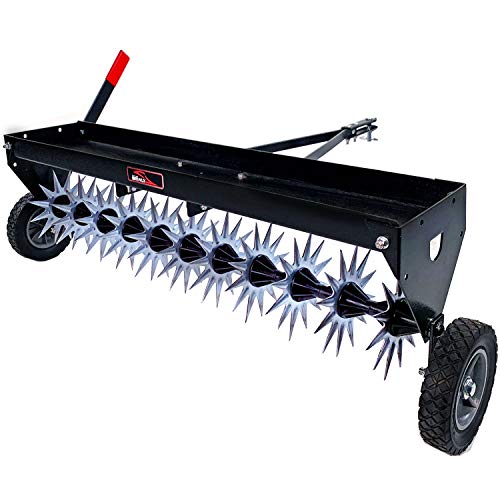
The Brinly SAT2-40BH-P is the spike aerator of the group, built for lawns where the soil is soft, loamy, or sandy rather than rock-hard clay. Instead of pulling plugs, eleven tine wheels with twelve spike tips each punch holes up to two inches deep, opening the surface so water and fertilizer can reach the roots. The patent-pending three-dimensional tine design adds strength in two directions, so the tines resist bending better than flat spikes.
A 150-pound weight tray gives the deepest penetration the design allows, and transport wheels make it easy to move the unit across hard surfaces without dragging the spikes. The universal hitch fits most lawn tractors. Keep in mind that spike aeration does not remove soil, so on heavily compacted clay it can press the soil sideways and make compaction worse around each hole. For that kind of ground, a plug aerator is the better choice.
Key Specs
| Spec | Detail |
|---|---|
| Aeration type | Spike |
| Working width | 40 in |
| Spike depth | Up to 2 in |
| Tines | 11 tine wheels, 132 tips |
| Weight tray capacity | Up to 150 lb |
| Hitch | Universal |
| Transport wheels | Yes |
How to Choose
Start with your lawn size. A tow-behind plug aerator is the practical choice once your lawn needs a riding mower, while a manual core tool is the sensible pick for a small yard or a few worn patches. A 40-inch tow unit that fits through a standard gate is the best compromise for mid-size lawns.
Next, look at your soil. Plug aerators remove cores and are the right answer for compacted clay and heavy foot traffic. Spike aerators only poke holes, so they work best on soft, loamy, or sandy soil that needs light, routine aeration. If the ground feels like concrete when dry, choose plugs.
Check the thatch layer before you buy. Push a finger into the turf and look for a dense mat of dead stems between the green blades and the soil. If that mat is thicker than half an inch, clear it with a dethatcher first, because plugs punched through thick thatch do little good. Finally, confirm the hitch and storage: tow-behind units need a tractor with a pin hitch and room for a wide steel frame, while manual tools need only a corner of the garage.
Who Should Skip It
Skip tow-behind aerators if you mow with a walk-behind mower and have no tractor. Skip plug aerators on newly laid sod or freshly seeded lawns, because the tines can tear young roots before they take hold. Wait until the new turf is well established.
Skip spike aerators if your soil is heavy clay that bakes hard in summer; pushing spikes into that ground can compact the soil around each hole instead of opening it up. Skip the electric dethatcher if your lawn has little thatch, since running tines across healthy turf adds wear without benefit. Skip all aeration when the soil is bone dry or soaking wet: dry soil resists the tines and wet soil smears and clogs them. The best time is one day after a good rain or a deep watering, when the ground is moist but firm underfoot.
FAQ
When is the best time to aerate a lawn?
Early fall is the best window for cool-season grass, and late spring works for warm-season grass. Aerate when the grass is actively growing so it fills the holes quickly, and work one day after rain or irrigation when the soil is moist but not muddy.
How often should I aerate?
Most lawns benefit from aeration once a year. Lawns with heavy foot traffic, clay soil, or much shade may need it twice a year, while a healthy lawn on sandy soil can often go two years between sessions.
Should I pick up the soil plugs after aerating?
Leave them on the lawn. The plugs break down within a week or two and return nutrients to the soil. Raking them up removes material your grass needs, and mowing over them helps them crumble faster.
Is a spike aerator as good as a plug aerator?
No. A spike aerator pokes holes without removing soil, which helps on soft ground but can worsen compaction in heavy clay. A plug aerator removes cores and is the stronger choice for compacted soil, worn paths, and lawns never aerated before.
Final Verdict
The right lawn aerator matches your lawn size and soil. A large lawn with compacted ground calls for a tow-behind plug aerator: the Agri-Fab 48-inch model covers the most ground per pass, and the Brinly 40-inch model fits tighter yards and gates. A small lawn or a few tired patches are better served by the Yard Butler manual core tool, which pulls real plugs without any engine or rental. Soft soil responds well to the Brinly spike aerator, and a thatch-choked lawn needs the Sun Joe dethatcher before aeration can do its job. Whichever you choose, aerate when the soil is moist, load the weight tray on tow units, and give the grass a few weeks to grow into the holes.