Key takeaways
- Three scopes matched to 6.5 Creedmoor distance work: two first focal plane dialing optics with zero stops and one light CDS hunting scope for field rifles.
A scope for a 6.5 Creedmoor is really a decision about how you plan to correct for drop. The cartridge flies flat and stays supersonic well past 800 yards, so the optic, not the round, becomes the limit at distance. You can dial elevation on exposed turrets with enough travel to reach 1,000 yards, hold with a marked reticle, or trust a custom dial matched to one load. Tube size, total travel, reticle language and rifle weight all flow from that single choice.
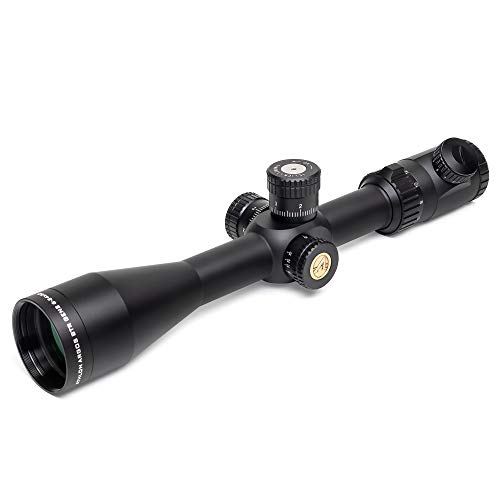

This shortlist suits three kinds of Creedmoor owners: target shooters who dial for steel at known distances, shooters who think in MIL and want an illuminated tree reticle, and hunters who carry a light rifle and need one dependable dial. Every scope below was chosen from the model names, reticle types and specification fields printed on its Amazon product page, and each one is still listed for purchase there.
Quick Picks
As an Amazon Associate we earn from qualifying purchases.
| Product | Best for | Key spec from title |
|---|---|---|
| Vortex Venom 5-25×56 EBR-7C MRAD | Long range target and steel shooting | 34mm tube with 85 MOA of turret travel |
| Athlon Argos BTR GEN2 6-24×50 APMR MIL | Shooters who dial and hold in MIL | Illuminated first focal plane APMR reticle |
| Leupold VX-3HD 4.5-14×40 CDS-ZL Wind-Plex | Lightweight hunting rifles | CDS-ZL locking dial at 13.3 ounces |
How to Choose
Magnification Range and Objective Size
The Creedmoor reaches 1,000 yards with room to spare, and magnification decides how much of that reach you can use. A 5-25x or 6-24x top end gives enough power to read a small steel plate and spot your own misses at long range, while 4.5-14x covers hunting distances with a wider, calmer picture. Bigger objectives, 56mm here against 40mm, gather more light at dawn and dusk but add bulk high above the bore. On hot afternoons, heat shimmer punishes very high power, so a broad zoom range you can back down matters more than the biggest number on the box.
Reticle Pattern and Focal Plane
Two of these scopes put an etched tree reticle in the first focal plane, so every hold mark keeps its true value at any magnification. That suits shooters who hold for wind on one setting and dial elevation on another without doing conversion math in their head. The Leupold takes the opposite path: a plain second focal plane Wind-Plex with wind marks in the horizontal line, paired with a dial that carries the drop solution instead. Neither approach is wrong. Pick the tree if you hold often, and the clean duplex style if you would rather turn a dial and aim center.
Turret Travel, Click Values and Zero Stops
Travel is the quiet figure that decides your ceiling. The Venom offers 85 MOA of elevation movement inside its 34mm tube, the Athlon gives 18 MIL, and the Leupold provides 75 MOA, each enough for a Creedmoor at 1,000 yards from a level base, with the 34mm tube holding the most reserve. Keep the click language matched to the reticle: MIL clicks under a MIL reticle, MOA under MOA. A zero stop then protects the work. RevStop on the Vortex, a precision zero stop on the Athlon and the push-button ZeroLock on the Leupold all return you to a confirmed zero by feel.
Tube Diameter, Mounting and Weight
Ring size follows the tube, and these three scopes use three different ones: 34mm, 30mm and 1 inch, so rings from an older scope may not carry over. Weight spreads even wider, from 35 ounces for the Venom down to 13.3 ounces for the Leupold, a gap you feel on a rifle carried over rough ground and barely notice on a bench gun. Eye relief sits between 3.3 and 4.4 inches across the group, comfortable for the mild recoil of this cartridge. If your chosen scope runs low on travel, a canted rail returns unused movement to the elevation turret.
The 3 Best Options
Vortex Venom 5-25×56 EBR-7C MRAD
The Venom is the heavy, purpose-built dialing scope of this group, and it fits a Creedmoor that lives on a bench, a bipod or a barricade. Its 34mm tube holds 85 MOA of travel, the most here, so a shooter can dial from a 100 yard zero out to 1,000 yards and still keep reserve in the turret. The first focal plane EBR-7C reticle gives true holds at every setting, the RevStop system brings the turret back to zero with a firm stop, and the included throw lever speeds up changes between stages or shooting positions.
Specs
- Magnification: 5-25x
- Objective lens diameter: 56 mm
- Tube diameter: 34 mm
- Reticle: EBR-7C (MRAD), first focal plane
- Turret travel: 85 MOA / 25 MRAD max elevation and windage
- Zero system: RevStop Zero System
- Eye relief: 3.6 in
- Field of view: 21.2 to 4.7 ft at 100 yds
- Length: 15.3 in
- Weight: 35 oz
- Model number: VEN-52502
Best for: Range and steel shooters who dial elevation often and want the deepest travel reserve in this group.
Watch out for: At 35 ounces and 15.3 inches long it is a lot of scope on a rifle you plan to carry all day.
Athlon Argos BTR GEN2 6-24×50 APMR MIL
The Argos BTR GEN2 suits the shooter who works in MIL from the first day and wants illumination without moving into the biggest tube class. Its APMR reticle is etched in the first focal plane and lit, so the fine hold marks stay readable against dark timber or a shaded target face, and the 0.1 MIL clicks speak the same language as the reticle. A precision zero stop guards the return to zero, and the side focus runs from 10 yards to infinity, which also lets the same scope serve on a rimfire trainer for cheap practice at short range.
Specs
- Magnification: 6-24x
- Objective lens diameter: 50 mm
- Tube diameter: 30 mm
- Reticle: APMR FFP IR MIL, illuminated and glass etched
- Focal plane: First focal plane
- Click value: 0.1 MIL
- Turret travel: 18 MIL elevation and windage
- Zero stop: Precision zero stop
- Parallax: Side focus, 10 yds to infinity
- Eye relief: 3.3 in
- Field of view: 16.7 to 4.5 ft at 100 yds
- Length: 14.1 in
- Weight: 30.3 oz
- Part number: 214063
Best for: MIL shooters who want an illuminated tree reticle, a firm zero stop and close side focus in a 30mm tube.
Watch out for: Eye relief is the shortest here at 3.3 inches, so mount position needs care on rifles with long stocks.
Leupold VX-3HD 4.5-14×40 CDS-ZL Wind-Plex
The VX-3HD is the hunter’s answer in this group, built around Leupold’s Custom Dial System. Order the free custom dial with your load data and the elevation turret comes back laser marked in yardage, so ranging a deer, turning the dial to the number and aiming center replaces hold charts in the field. The CDS-ZL ZeroLock button keeps that dial from moving in a pack or against a saddle scabbard, and at 13.3 ounces the scope keeps a mountain rifle light. The Wind-Plex reticle adds simple wind marks without crowding the view at last light.
Specs
- Magnification: 4.5-14x
- Objective lens diameter: 40 mm
- Tube diameter: 1 in
- Reticle: Wind-Plex, second focal plane
- Elevation dial: CDS-ZL ZeroLock with Custom Dial System
- Click value: 1/4 MOA
- Elevation adjustment range: 75 MOA
- Eye relief: 4.4 to 3.6 in
- Field of view: 19.9 to 7.4 ft at 100 yds
- Weight: 13.3 oz
- Finish: Burnt Bronze
- Model number: 180621
Best for: Hunters who want one load matched to a yardage dial and the lightest scope in this group on a carried rifle.
Watch out for: The custom dial is tied to one load and one set of conditions, so a change of ammunition means ordering a new dial.
Which One Fits Your Situation
Steel and Paper at 600 to 1,000 Yards
Choose the Vortex Venom. Known distances reward dialing, and its 85 MOA of travel, firm RevStop return and fine EBR-7C center give you the tools to build a dope card and trust it under time pressure. The weight that hurts a hunter becomes steadiness on a supported rifle, and the 56mm objective keeps small plates readable when the light drops at the end of a range day.
Learning Distance Shooting in MIL
Choose the Athlon Argos BTR GEN2. A new distance shooter makes fewer errors when the reticle and the turrets share one language, and this scope pairs a MIL tree with 0.1 MIL clicks and a zero stop that forgives a lost count. The 10 yard side focus also lets you practice hold and dial drills with a rimfire at short range, building the same habits you will use with the Creedmoor.
Backcountry and Mountain Hunting
Choose the Leupold VX-3HD. A hunter covering ground on foot feels every ounce, and this scope weighs less than half of the Venom while still dialing to any sane hunting distance with its custom yardage dial. The locking ZeroLock turret survives pack straps and brush, the 4.5x low end keeps the picture wide in timber, and the Elite optical system is built for the dim minutes when game moves.
One Scope Shared Between Two Rifles
Choose the Athlon Argos BTR GEN2 again, this time for its middle ground. The 30mm tube matches the most common ring size, the weight stays manageable on a hunting rifle, and the travel and tree reticle still cover range work. Moving any scope means a fresh zero on the new rifle, so record your turret settings for both guns and confirm them with a few shots after every swap.
Common Mistakes
- Mixing a MIL reticle with MOA turrets, or the reverse, then converting numbers in your head while the wind is moving.
- Buying a scope with too little elevation travel and no canted rail, then running out of turret before the target distance.
- Trusting hold marks on a second focal plane reticle at a magnification where those marks no longer match their printed values.
- Shooting at maximum power through midday heat shimmer instead of backing the zoom down until the picture settles.
- Ordering rings before checking the tube diameter, since this group alone spans 34mm, 30mm and 1 inch tubes.
Frequently Asked Questions
How Much Magnification Does a 6.5 Creedmoor Need at 1,000 Yards?
Most shooters settle between 14x and 20x for steel at that distance, which makes a 5-25x or 6-24x scope comfortable with power in reserve. Very high settings magnify heat shimmer and shrink the field of view, so the extra top end helps most on cold, calm mornings and for spotting your own misses on a berm.
Is First Focal Plane Better Than Second for This Cartridge?
First focal plane keeps hold marks true at every setting, which suits shooters who hold for wind and drop at varied power. Second focal plane keeps the reticle bold and constant, and paired with a yardage dial like the CDS it can be quicker for hunting. The better pick follows your correction method, not the cartridge.
MOA or MIL: Which System Should a New Shooter Pick?
Pick one system and match the reticle to the turrets. MIL clicks of 0.1 move the impact about a third of an inch at 100 yards and keep numbers small at distance, while MOA clicks of 1/4 inch feel finer for small corrections. Either works for a Creedmoor; mixing the two inside one scope causes the errors.
Do I Need a Canted Rail with These Scopes?
Not for 1,000 yards with a Creedmoor. The flattest shooting of the three, the Venom, holds 85 MOA of travel, and even the Leupold offers 75 MOA, far beyond the drop this cartridge shows at that range from a level base. A canted rail only earns its place when you plan to shoot well past that distance often.