Our Short List of 3
All 3 Picks at a Glance
| Product | Specs | Action |
|---|---|---|
 Bionaire BW2300-N Twin Window Fan | Check price on Amazon | |
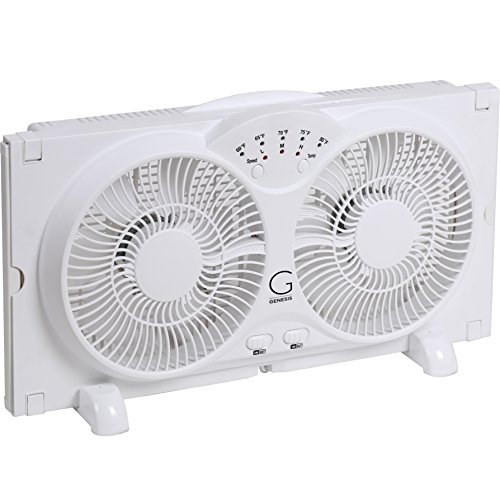 Genesis A1WINDOWFAN Twin Window Fan | Check price on Amazon | |
 Comfort Zone CZ310R Twin Window Fan | Check price on Amazon |
Key takeaways
- The best AC window fans for off grid living run on low watts through an inverter or power station. Compare four reversible twin window fans for cabins and RVs.
Living off grid does not mean living without moving air. A hot cabin, a stuffy RV, or a small solar-powered home still needs ventilation, and a window fan is one of the cheapest ways to get it. The best AC window fans for off grid use move enough air on a small amount of electricity, reverse direction to pull cool night air in or push hot stale air out, and fit a standard window without a complicated installation.
Off grid, every watt has a cost: a fan drawing 75 to 80 watts can run for hours from a modest battery bank through a small inverter, while an air conditioner would drain the same bank far faster. A window fan will not cool a room the way an air conditioner does, but it exchanges air well, bringing in cooler evening air and exhausting the heat that builds up during the day.
All four fans in this guide are standard 120-volt AC fans, so they need an inverter or a portable power station with AC outlets to run away from the grid. No full-size DC or solar-direct room window fan could be verified on Amazon US at the time of writing; the small solar exhaust kits sold for coops and sheds ventilate outbuildings, not bedrooms. For a cabin or RV, a low-wattage AC twin fan paired with an inverter remains the practical choice.
At a Glance
| Product | Best for | Key spec |
|---|---|---|
| Bionaire BW2300-N | Set-and-forget cooling with a thermostat | Twin 8.5-inch blades, 3 speeds, 80 watts, remote control |
| Genesis A1WINDOWFAN | Strong airflow with simple controls | Twin 9-inch blades, 3 speeds, reversible airflow, adjustable thermostat |
| Comfort Zone CZ310R | Bedrooms and remote control from bed | Twin 9-inch blades, 3 speeds, 3 functions, remote control |
| Holmes HAWF2041-N | Simple manual fan for rainy weather | Dual 8-inch blades, 3 speeds, 75 watts, water-resistant motors |
How to Choose an AC Window Fan for Off Grid Use
Wattage and inverter load
Wattage is the first number to check when you live off grid. A fan that draws 75 to 80 watts at full speed uses roughly that many watt-hours per hour, before inverter losses. Add about 10 to 15 percent for the inverter, and an evening of running a single fan works out to a few hundred watt-hours from the battery bank. That is a manageable load for a small solar setup with a 100 amp-hour deep-cycle battery or a portable power station. Low speed draws far less than high speed, and on a mild night it is often enough.
Reversible airflow
A reversible fan is far more useful off grid than a one-direction fan. In intake mode it pulls cooler outside air into the room, which works best in the evening and at night. In exhaust mode it pushes hot, stale air out, which works best during the day when the cabin has heated up. The best twin fans run one blade in while the other runs out, exchanging air in both directions at once. Prefer fans that reverse with a switch or a remote rather than by turning the whole unit around.
Window fit and sealing
A window fan only works if it seals the opening. Measure the window before ordering, and compare both the width and the height of the opening with the fan’s stated fit range. Most twin window fans in this guide fit windows from about 24 inches wide upward, with accordion-style extender panels that fill the gap on either side. Any gap lets hot air leak back in. Check for a bug screen and confirm the minimum opening height, since some fans need at least 12 inches of vertical space.
Thermostat and automatic shutoff
A thermostat is a genuine power saver off grid. Instead of running all night at a fixed speed, a fan with a programmable thermostat can slow down or switch off once the room reaches the set temperature, saving battery for the hours when cooling is actually needed. A remote control matters in a bedroom or a loft where getting up to change settings in the dark is unwelcome.
The solar and DC reality
These fans are AC fans that need an inverter or a power station with AC output. If a listing promises a full-size room window fan that runs directly from a solar panel with no battery and no inverter, treat that claim with skepticism. The genuinely solar-powered fans sold on Amazon US are small DC exhaust kits with panels in the 10 to 12 watt range, designed to ventilate coops, sheds, and greenhouses. They cannot cool a bedroom. For room cooling off grid, the honest setup is a low-wattage AC twin fan, a pure sine wave inverter or power station, and a solar-charged battery bank.
Product Reviews
Bionaire BW2300-N Twin Window Fan
The Bionaire BW2300-N is the most feature-complete fan in this guide, and it suits off-grid buyers who want the fan to manage itself. It has twin 8.5-inch blades with electronically reversible airflow, three speeds, a programmable thermostat with an LED display, and a remote control. The blades can run in intake, exhaust, or exchange mode, so one side can pull cool air in while the other pushes warm air out. The fan draws 80 watts, low enough to run from a small inverter, and it carries a 3-year warranty, the longest among the fans in this guide.
The fit range covers windows from 24 to 36 inches wide, with an adjustable extender panel included. Its thermostat earns it the top spot: set a target temperature and it adjusts itself rather than running at full speed all night. The remote handles power, speed, and direction from across the room.
There are trade-offs. Reviewers note that the LED display can be bright in a dark bedroom. The top speed is modest compared with some high-velocity fans, so this is a steady ventilation fan rather than a blast of air. It weighs about 6.6 pounds, so check that the window frame can hold it securely.
Pros:
– Programmable thermostat saves battery by adjusting speed automatically
– Electronically reversible blades with intake, exhaust, and exchange modes
– Remote control included
– Low 80-watt draw suits small inverters and power stations
– 3-year warranty
Cons:
– LED display can be bright in a dark bedroom
– Modest top speed compared with high-velocity fans
– Heavier than the lightest options at about 6.6 pounds
Genesis A1WINDOWFAN Twin Window Fan
The Genesis A1WINDOWFAN is a high-velocity twin fan built around two independent 9-inch fan heads, each with its own copper motor. It runs on standard 120-volt household current with three speed settings, reversible airflow, an adjustable thermostat, LED indicator lights, and Max Cool technology. It measures 24 by 12 by 4 inches and weighs about 8.4 pounds. It is ETL certified, and the expandable side panels fit windows up to 37 inches wide. Two removable legs are included, so the fan can also stand on a table or floor.
For off-grid use, the Genesis makes its case on airflow and flexibility. The twin 9-inch blades move more air than the 8-inch models in this guide, and the independent motors mean each side can be set to its own task. The adjustable thermostat helps limit runtime, which matters when every watt-hour counts, and the removable legs let it double as a freestanding unit in an RV.
The main limitation is weight. At about 8.4 pounds it is the heaviest fan here and needs a solid window frame. No wattage figure is stated in the listing information available, so check the rating label and size the inverter with headroom. It has no remote, so settings are changed at the unit.
Pros:
– Twin 9-inch blades with independent copper motors for strong airflow
– Reversible airflow with intake and exhaust modes
– Adjustable thermostat and LED indicators
– Fits windows up to 37 inches wide with expandable panels
– Removable legs allow tabletop or floor use
Cons:
– Heaviest fan in this guide at about 8.4 pounds
– No remote control; settings are changed at the unit
– No wattage figure stated in the listing information available
Comfort Zone CZ310R Twin Window Fan
The Comfort Zone CZ310R is the bedroom-friendly pick in this guide. It is a twin 9-inch window fan with three speeds, three functions, and a remote control, listed with an airflow figure of 8.40 feet per second. The three functions cover cooling, circulation, and exhaust: both fans can draw cool air in, one can draw air in while the other exhausts, or both can push warm air out. A removable bug screen and a fabric cover are included, and the fan has tabletop feet so it can be used freestanding as well as in a window.
The remote is the reason this fan suits bedrooms. From bed, the fan can be switched between intake and exhaust, the speed can be changed, and the unit can be switched off without getting up. That matters off grid: the right move late at night is often to switch to low-speed circulation once the room has cooled, and a fan that requires getting up will simply be left running at full speed. At about 4.6 pounds, it is the lightest fan in this guide, with listed dimensions of about 22.5 by 10.88 by 4.88 inches.
The limitations are modest. No wattage figure is stated in the listing information available, so the power draw should be checked on the unit’s rating label before sizing an inverter. It has no programmable thermostat, so it will not slow itself down as the room cools, and buyers with very wide windows should measure first.
Pros:
– Remote control for speed and direction from bed
– Three functions: cooling, circulation, and exhaust
– Lightest fan in this guide at about 4.6 pounds
– Removable bug screen and fabric cover included
– Tabletop feet allow freestanding use
Cons:
– No programmable thermostat to save power automatically
– No wattage figure stated in the listing information available
– Wide windows may need extra sealing beyond the included panels
Holmes HAWF2041-N Dual Blade Twin Window Fan
ASIN: B00005CDPH
The Holmes HAWF2041-N is the simplest fan in this guide, and simplicity is a virtue off grid. It has dual 8-inch blades, three speed settings, and manual controls, with a listed draw of 75 watts, the lowest stated wattage among the fans reviewed here. The fan is designed to fit double-hung windows with minimum openings of 25 inches wide and 12 inches high, and the extender panels extend the fit to 35 inches wide. It measures 6 by 25.7 by 13.3 inches. The motors are described as water-resistant, useful for a fan that stays in a cabin window through summer rain.
For off-grid use, the Holmes earns its place on power draw and durability. At 75 watts it is the lightest load on a battery bank of the four fans here, and manual controls mean there is no standby draw from a digital display or a remote receiver when the fan is off. Reversing means positioning the fan to face inward or outward: less convenient than electronic reversing, but one less electronic component that can fail. The design has been sold for many years, so parts and advice are easy to find.
The trade-offs follow from the simplicity. There is no remote, thermostat, or display, so the fan runs at its set speed until someone changes it, and reversing requires removing it from the window and turning it around. Reviewers describe it as noisier than the other fans here at high speed. For a workshop or a cabin where the fan is set once and left alone, those are acceptable compromises for the lowest power draw in the group.
Pros:
– Lowest stated wattage in this guide at 75 watts
– Water-resistant motors suit windows exposed to rain
– Simple manual controls with no standby power draw
– Extender panels fit windows up to 35 inches wide
– Long-running model with widely available support and parts
Cons:
– No remote control, thermostat, or display
– Reversing requires turning the whole unit around in the window
– Louder than the other fans here at high speed
Which One Fits Your Off-Grid Setup
For a solar cabin with a battery bank and an inverter, the Bionaire BW2300-N is the best all-round choice: the thermostat manages power automatically, the remote makes adjustments easy, and the 80-watt draw is modest. The Genesis A1WINDOWFAN moves the most air and fits windows up to 37 inches wide, though it is the heaviest fan here and needs a solid frame.
For a bedroom, the Comfort Zone CZ310R is the most practical pick: lightest in the guide, with a remote and three functions covering the whole night. For a workshop or a small battery bank, the Holmes HAWF2041-N has the lowest stated draw at 75 watts and the simplest controls, with water-resistant motors for exposed windows.
Whichever fan is chosen, the supporting setup matters as much as the fan. Use a pure sine wave inverter or a portable power station with AC outlets, size it with headroom above the fan’s wattage, and run the fan on low or medium speed whenever that is enough. Open a second window or vent on the opposite side of the room so the fan has somewhere to draw air from or push air to, and seal gaps around the extender panels with foam tape if the fit is loose.
Frequently Asked Questions
Can an AC window fan run off grid?
Yes, with an inverter or a portable power station. An AC window fan needs standard 120-volt household current, which an inverter produces from a 12-volt battery bank and a portable power station provides from its AC outlets. The fans in this guide draw 75 to 80 watts where a wattage figure is stated, a light load for a small inverter.
How much battery does a window fan use overnight?
A fan drawing 75 watts uses about 75 watt-hours per hour before inverter losses, so eight hours at full speed is roughly 600 watt-hours plus 10 to 15 percent for the inverter. Low speed or a thermostat cuts that considerably.
Are there DC or solar-powered window fans for rooms?
Small solar-powered DC exhaust fans exist, but the verified ones are kits with 10 to 12 watt panels designed to ventilate coops, sheds, and greenhouses. They do not move enough air to cool a bedroom. No full-size DC-native room window fan could be verified on Amazon US at the time of writing. For room cooling off grid, a low-wattage AC twin fan run through an inverter remains the practical option.
Should a window fan blow in or out?
Both, at different times. In the evening and at night, when outside air is cooler than inside air, run the fan in intake mode to pull cool air in. During the day, when the room has heated up, run it in exhaust mode to push hot air out. Twin fans with an exchange mode can do both at once, with one blade drawing air in while the other exhausts.
What size window fan do I need?
Measure the window opening first. Most twin window fans in this guide fit windows from about 24 inches wide, with extender panels reaching 35 to 37 inches. Check the minimum opening height as well, since some fans need at least 12 inches of vertical space. A fan too small for the opening leaves gaps, so fit range matters more than blade size alone.
Do I need a pure sine wave inverter for a window fan?
A pure sine wave inverter is the safer choice for any fan with electronic controls, a thermostat, or a remote receiver, because modified sine wave power can cause buzzing, overheating, or erratic behavior in sensitive electronics. A simple manual fan may run on a modified sine wave inverter, but it can run louder and hotter. At the low wattages these fans need, a pure sine wave inverter is worth choosing.
Conclusion
The best AC window fan for off-grid living is the one that moves enough air on the least electricity and fits the window it sits in. The Bionaire BW2300-N leads on features with its thermostat and remote, the Genesis A1WINDOWFAN leads on airflow for larger windows, the Comfort Zone CZ310R is the lightest and most bedroom-friendly option, and the Holmes HAWF2041-N has the lowest stated power draw and the simplest controls. All four need an inverter or a portable power station away from the grid, and all four reward the same habits: run them on low speed when that is enough, let a thermostat do the work where one is available, and seal the window properly. Ventilation will not replace air conditioning on the hottest days, but for most off-grid nights, a well-chosen window fan is the difference between a stuffy room and a comfortable one.
Disclosure: As an Amazon Associate, we earn from qualifying purchases.