Our Short List of 3

- Best for: Large greenhouses where vented, fan-driven heat is the priority.
- Heat output: 50,000 BTU
- Heating method: Forced air with built-in high-velocity fan
- Mounting type: Ceiling mount
- Fuel type: Set for natural gas, includes LP conversion kit
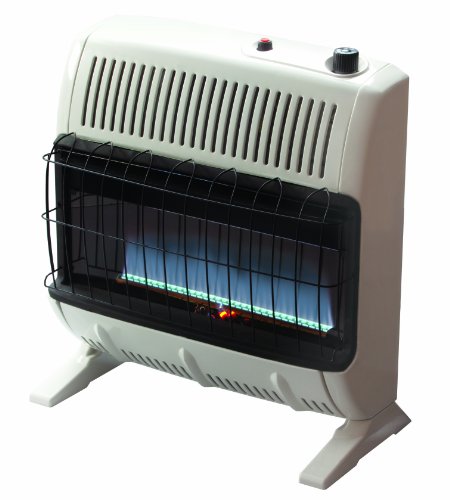
- Best for: Medium greenhouses with wall space and no flue, where steady convection heat is wanted.
- Heat output: 30,000 BTU
- Heating coverage: Heats up to 1,000 sq. ft.
- Heating method: Convection
- Fuel type: Propane

- Best for: Small greenhouses and short frost-protection jobs where portability matters.
- Heat output: 4,000, 9,000, or 18,000 BTU per hour
- Heating coverage: Heats up to approximately 400 square feet
- Heating method: Radiant
- Fuel type: Propane
All 4 Picks at a Glance
| Product | Specs | Action |
|---|---|---|
| Mr. Heater Big Maxx MHU50NG |
| Check price on Amazon |
| Mr. Heater 30,000 BTU Vent Free Blue Flame Propane Heater |
| Check price on Amazon |
| Mr. Heater Portable Big Buddy Heater |
| Check price on Amazon |
 ProCom ML300TBA-B Ventless Blue Flame Heater |
| Check price on Amazon |
Key takeaways
- Compare four propane greenhouse heaters by heat output, mounting, and venting, and learn the ventilation and clearance rules that keep a heated greenhouse safe.
The real decision when heating a greenhouse with propane is how much heat the space loses on a cold night, and whether the heater can replace it without filling the air with combustion gases. A heater that is too small leaves tender plants shivering by dawn, while an oversized or poorly vented unit wastes fuel and can stress plants with dry air and fumes. Matching output, mounting, and venting to the size and sealing of the structure is what separates a heater that protects a crop from one that only warms the grower.
This article is for hobby growers with a backyard greenhouse, small nursery owners keeping stock alive through frost, and anyone heating a hoop house or glasshouse with bottled gas. It compares four propane heaters sold on Amazon, from a ceiling-mounted vented unit for large structures to portable and wall-mounted options for small houses, and explains the safety rules that apply to every one of them.
Quick Picks
As an Amazon Associate we earn from qualifying purchases.
| Product | Best for | Key spec from title |
|---|---|---|
| Mr. Heater Big Maxx MHU50NG | Large greenhouses needing steady, vented heat | 50,000 BTU unit heater |
| Mr. Heater 30,000 BTU Vent Free Blue Flame Propane Heater | Medium greenhouses with wall space and no venting | 30,000 BTU blue flame heater |
| Mr. Heater Portable Big Buddy Heater | Small greenhouses and spot frost protection | 18,000 BTU portable radiant heater |
| ProCom ML300TBA-B Ventless Blue Flame Heater | Medium greenhouses wanting thermostat control | 28,000 BTU blue flame heater |
How to Choose
Size the Heater to the Greenhouse
Start with the size of the structure and how fast it loses heat, not with the biggest heater in the catalog. A small hobby greenhouse of a few hundred square feet can often be protected with 10,000 to 20,000 BTU, while a large glasshouse may need 50,000 BTU or more. Glazing matters as much as floor area: single-pane glass and thin polycarbonate lose heat fast, while double-wall polycarbonate and insulated walls hold it better. Size for the coldest night you expect, not the average one, and let a thermostat control the heater so it only burns fuel when the temperature drops.
Vented or Vent-Free: Decide Before You Buy
Vented heaters send combustion gases outside through a flue, while vent-free heaters release them into the room, and that difference is the most important choice in this article. A vented unit such as a ceiling-mounted forced-air heater keeps exhaust out of the growing space entirely, which is the safer arrangement for a sealed greenhouse where people work. Vent-free heaters are simpler to install, since they need no flue, but they add moisture and combustion byproducts to the air the plants breathe. Many growers choose vented heat for the main system and keep a small portable unit only as backup during a power cut.
Ventilation, Carbon Monoxide, and Clearances
Every propane heater here needs fresh air and clear space, and the rules are not optional. A vented heater must be installed exactly as its manual describes, with the flue routed outdoors and the clearances from ceiling and walls observed. A vent-free heater needs a permanent fresh-air supply and must never run in a space sealed tight against the cold. Install a carbon monoxide alarm in any greenhouse where a gas heater runs, and keep plants, pots, soil bags, and shade cloth away from the burner. Check gas connections for leaks each season, and shut the gas off and ventilate at once if you smell gas.
Thermostat Control and Fuel Supply
A thermostat turns a heater from a blast of hot air into a climate tool. Without one, the heater runs until someone switches it off, which can cook tender seedlings on a mild night or let the temperature crash when nobody checks. Thermostat-controlled models hold a set temperature and only burn fuel when the air drops, which saves gas and keeps conditions steadier for plants. Think about fuel supply before the first cold night: portable heaters run on small cylinders that need frequent swapping, while larger units connect to a 20-pound tank or a bulk tank with a hose and regulator. Keep a spare tank filled, and store spare cylinders upright and outdoors, away from the heater.
The 4 Best Options
Mr. Heater Big Maxx MHU50NG
- Best for: Large greenhouses where vented, fan-driven heat is the priority.
- Heat output: 50,000 BTU
- Heating method: Forced air with built-in high-velocity fan
- Mounting type: Ceiling mount
- Fuel type: Set for natural gas, includes LP conversion kit
Large greenhouses where vented, fan-driven heat is the priority.
It needs mains power for the fan and a proper flue installation, so plan the vent route and the conversion to propane before the first frost.
The Big Maxx is the pick for growers heating a large greenhouse who want the exhaust carried outside rather than released among the plants. Its ceiling mount keeps floor space free for benches and beds, and the built-in fan pushes warm air across the structure instead of letting heat pool near the roof. It arrives set for natural gas with a liquid propane conversion kit included, so it can run on bottled gas once converted, and it vents vertically or horizontally to suit the building. The fan needs mains power, so it is a main-system heater rather than a power-cut backup.
Mr. Heater 30,000 BTU Vent Free Blue Flame Propane Heater
- Best for: Medium greenhouses with wall space and no flue, where steady convection heat is wanted.
- Heat output: 30,000 BTU
- Heating coverage: Heats up to 1,000 sq. ft.
- Heating method: Convection
- Fuel type: Propane
Medium greenhouses with wall space and no flue, where steady convection heat is wanted.
Vent-free heaters release combustion gases into the room, so fresh-air ventilation and a carbon monoxide alarm are essential, and the unit must never run in a fully sealed space.
This wall-mounted blue flame heater is a straightforward choice for a medium greenhouse that has no flue and needs steady background warmth. Its blue flame burner warms the air by convection, spreading heat through the space rather than beaming it at one bench, and the built-in thermostat holds a set temperature through the night. Electronic ignition runs on a battery, so it starts without mains power, and the oxygen depletion sensor is designed to shut the burner down if oxygen in the room drops. Because it is vent-free, it needs a reliable source of fresh air in the structure.
Mr. Heater Portable Big Buddy Heater
- Best for: Small greenhouses and short frost-protection jobs where portability matters.
- Heat output: 4,000, 9,000, or 18,000 BTU per hour
- Heating coverage: Heats up to approximately 400 square feet
- Heating method: Radiant
- Fuel type: Propane
Small greenhouses and short frost-protection jobs where portability matters.
Radiant heat warms what it faces, so plants behind the heater or outside its beam stay cold, and small cylinders empty quickly at the highest setting.
The Big Buddy is the portable option, suited to a small greenhouse, a cold frame, or spot protection for a few tender plants on a frosty night. Its radiant burner warms objects and plants in front of it rather than the whole volume of air, and three settings let the grower match output to the night. The maker lists greenhouse use among its recommended uses, and the unit is approved for indoor and outdoor use. Low-oxygen shutoff and tip-over protection are built in, and it runs on small cylinders or a larger tank with the maker’s accessories.
ProCom ML300TBA-B Ventless Blue Flame Heater
- Best for: Medium greenhouses where thermostat control and a choice of wall or floor placement matter.
- Heat output: 28,000 BTU
- Heating coverage: Heats up to 1,400 Sq. Ft.
- Heating method: Blue flame
- Fuel type: Liquid Propane only
Medium greenhouses where thermostat control and a choice of wall or floor placement matter.
It is a vent-free heater, so it needs fresh-air ventilation and a carbon monoxide alarm, and it runs on liquid propane only, with no natural gas option.
The ProCom is a wall-mounted blue flame heater with thermostat control for a medium greenhouse, supplied with both a wall mount and base feet so the grower can choose the setup. Its 28,000 BTU output sits between the portable Buddy and the larger 30,000 BTU Mr. Heater, and its thermostat lets it hold a chosen temperature instead of running flat out. It runs on liquid propane only, and like other vent-free heaters it needs fresh air in the room. The feet make it usable as a freestanding unit in a greenhouse where wall space is taken by benches or glazing bars.
Which One Fits Your Situation
A Large Glasshouse or Nursery House
Choose the Mr. Heater Big Maxx, because its 50,000 BTU output and ceiling mount suit a large structure, and its flue carries exhaust outside instead of releasing it among the plants. The fan spreads warm air across benches, and the thermostat-ready design holds a steady night temperature. Plan the vent route and the propane conversion before the heating season starts.
A Medium Hobby Greenhouse Without a Flue
Choose the Mr. Heater 30,000 BTU Vent Free Blue Flame heater or the ProCom ML300TBA-B, both of which mount on the wall and need no chimney. Pick the Mr. Heater for convection warmth with battery ignition, or the ProCom if you want the option of standing it on its feet. Either way, keep a vent open for fresh air and fit a carbon monoxide alarm.
A Small Greenhouse or a Frost Emergency
Choose the Portable Big Buddy, because it can be carried to the plants that need it and set to a low output for a mild frost or a high output for a hard freeze. It is the only pick here that works with no installation at all. Keep spare cylinders ready, since small tanks empty fast on the highest setting.
A Greenhouse With No Mains Power
Choose the Mr. Heater 30,000 BTU Vent Free Blue Flame heater, because its battery ignition and thermostat need no mains supply, unlike the fan-driven Big Maxx. The Portable Big Buddy is the other power-free option, suited to smaller spaces. Both still need fresh air and a carbon monoxide alarm, and neither should run in a sealed structure.
Common Mistakes
- Buying a heater by floor area alone, without accounting for single glazing, drafts, and the coldest night of the year.
- Running a vent-free heater in a sealed greenhouse with no fresh-air opening and no carbon monoxide alarm.
- Storing spare propane cylinders inside the greenhouse next to the burner instead of outdoors.
- Placing plants, shade cloth, or soil bags inside the heater’s clearance zone and blocking airflow.
- Waiting until the first frost to test the heater, find the right fittings, and fill the spare tank.
Frequently Asked Questions
Can I use a propane heater in a greenhouse?
Yes, propane heaters are widely used in greenhouses, but the type and the ventilation matter. A vented heater carries exhaust outside, while a vent-free heater releases combustion gases into the room and needs a permanent fresh-air supply. Always fit a carbon monoxide alarm, keep clearances clear, and follow the maker’s instructions and local codes.
How many BTU do I need to heat a greenhouse?
It depends on size, glazing, and climate, not on floor area alone. A small hobby house may need 10,000 to 20,000 BTU, while a large single-glazed glasshouse can need 50,000 BTU or more on a freezing night. Size for the coldest night you expect, and let a thermostat control the heater so it only burns fuel when the temperature drops.
Are vent-free propane heaters safe in a greenhouse?
They can be used, but they carry real risks that a vented heater avoids. They release carbon monoxide and moisture into the air, so they need fresh-air ventilation and a carbon monoxide alarm, and they must never run in a sealed space. Many growers prefer vented heat as the main system and keep a vent-free unit only as backup.
Should I run my greenhouse heater all night?
A thermostat-controlled heater can run all night, cycling on and off as the temperature changes, which is the normal way to protect plants from frost. Running a heater without a thermostat all night risks overheating the house and wasting fuel. Set the thermostat to the lowest temperature your plants tolerate, and check the fuel supply before a long cold spell.